Headsets, controllers, Lighthouse base stations, and the trackers you strap on, with the specs that change the buying decision and the price a buyer actually pays. How each tracking method works is under the cards.
Prices checked 14 October 2026. US dollars unless a card says otherwise. List price when the maker publishes one. A range when shops disagree.
A working setup is not the headset price.
Quest 3S at $349.99 is ready to play. A Bigscreen Beyond 2 at $959 still needs two base stations (about $460 at HTC’s $229 each) and a pair of controllers you already own. Steam Frame at $1,059 does not include a charger. Galaxy XR at $1,799.99 does not include controllers. Vision Pro does not include motion controllers at all. A Vive Tracker 3.0 at $149 still needs those base stations. SlimeVR, HaritoraX, mocopi, and the Vive Ultimate Tracker do not.
Nothing matches that filter.
Headsets
WiiBoi, CC BY 4.0, Wikimedia Commons
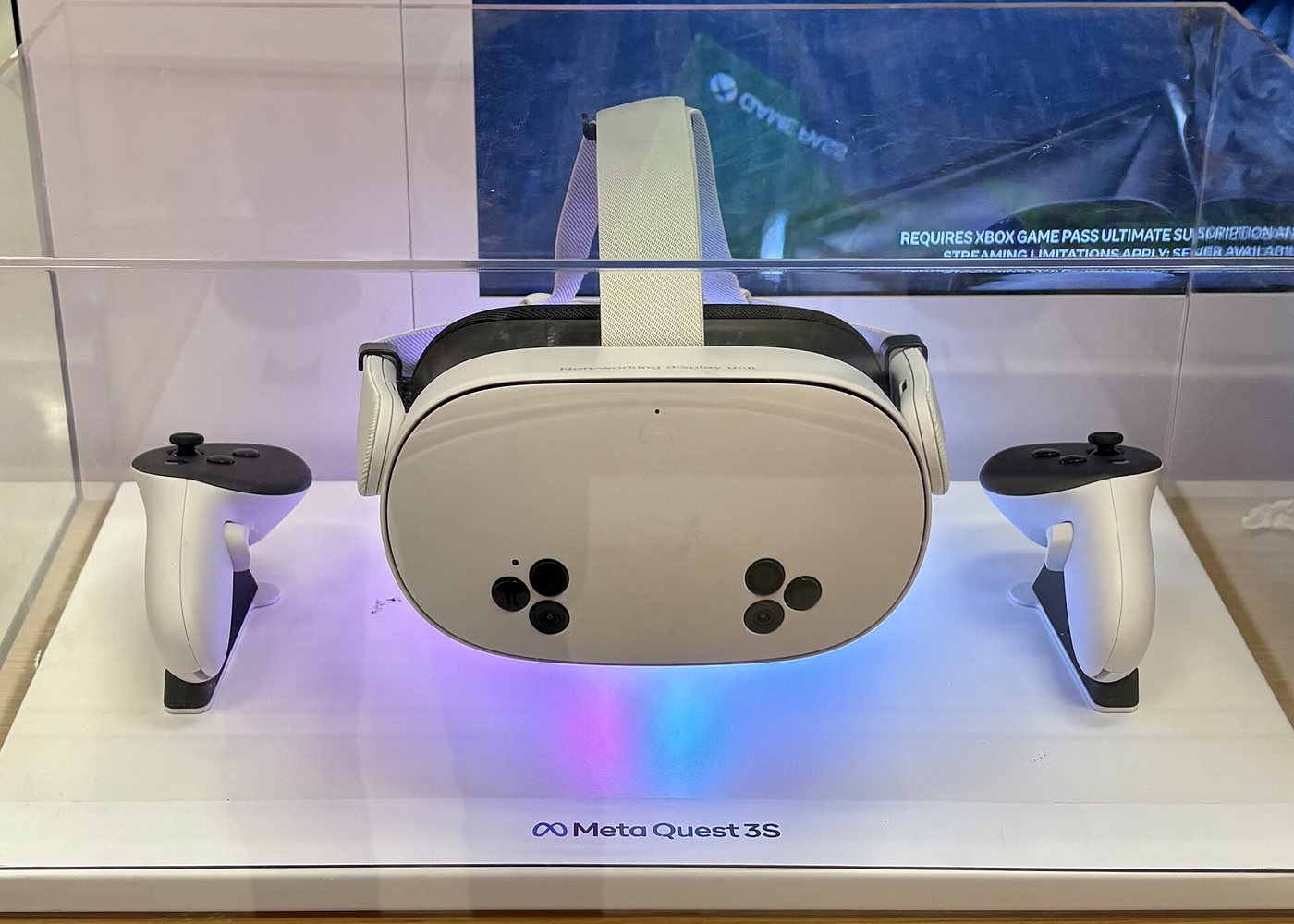
Meta Quest 3S
Meta
On sale
$349.99 / $449.99
US list for 128 GB and 256 GB. Meta raised both by $50 on 19 April 2026.
The current entry Quest. Same Snapdragon XR2 Gen 2 and game library as Quest 3, with the older fresnel optics and a narrower view.
Type
Standalone, and PC VR over Link or Air Link
Chip
Snapdragon XR2 Gen 2, 8 GB RAM
Display
Single LCD, 1832 x 1920 per eye, 20 PPD
Optics
Fresnel, three IPD positions
Field of view
96° horizontal, 90° vertical
Refresh
72, 90, and 120 Hz
Passthrough
Color, two RGB cameras. No depth sensor
Weight
514 g, excluding the facial interface
Battery
4324 mAh, about 2.5 hours
In the box
Touch Plus controllers
Meta pricing note, 16 April 2026. Meta Quest 3S product page. Source
IHazACatNamedMax, CC BY-SA 4.0, Wikimedia Commons
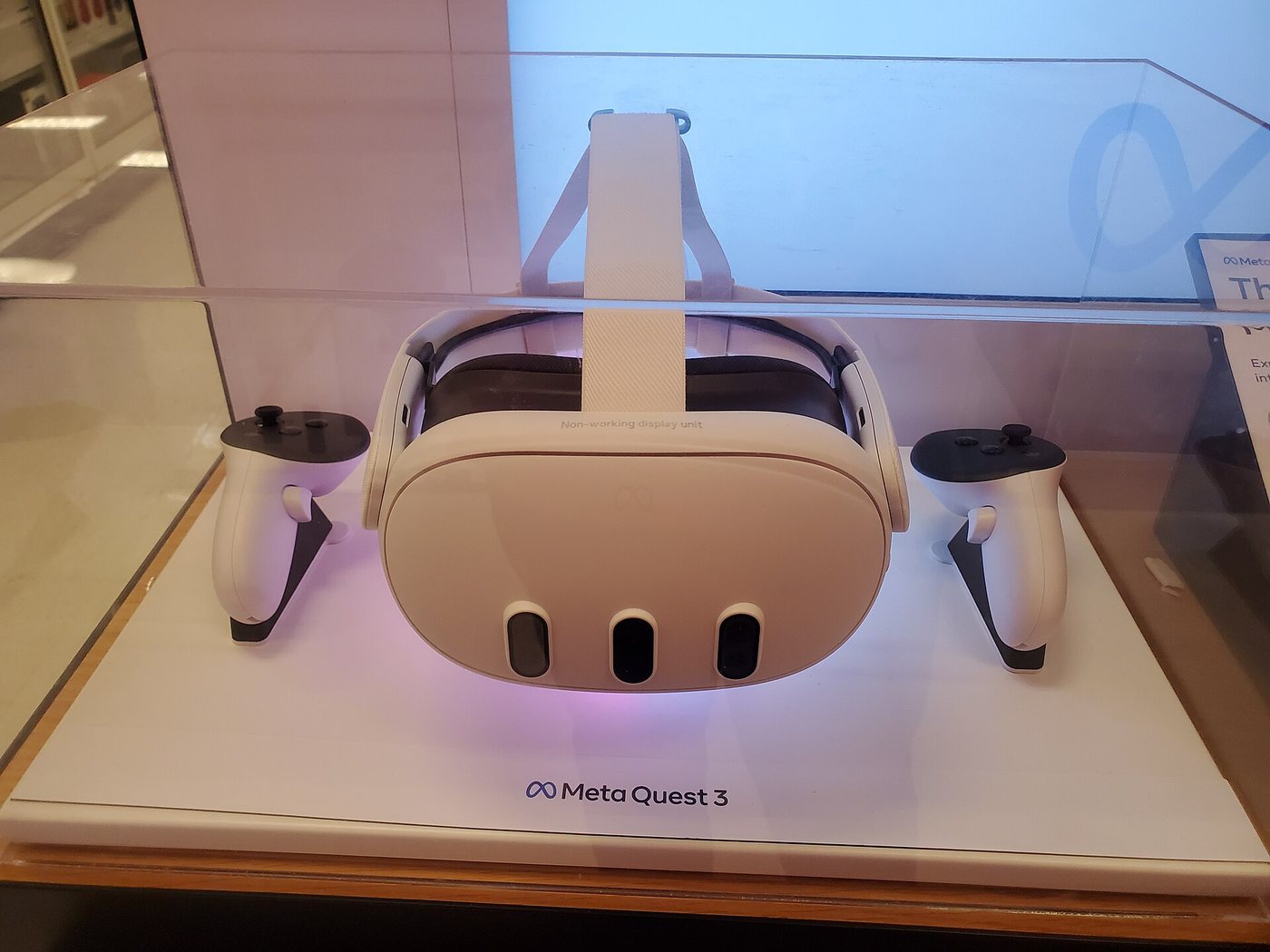
Meta Quest 3
Meta
On sale
$599.99
US list, 512 GB only. The 128 GB model is gone. Raised from $499.99 on 19 April 2026.
Meta’s current higher Quest. Pancake lenses, a wider view, and a depth sensor for mixed reality. Storage is 512 GB only.
Type
Standalone, and PC VR over Link or Air Link
Chip
Snapdragon XR2 Gen 2, 8 GB RAM
Display
LCD, 2064 x 2208 per eye, 25 PPD
Optics
Pancake, continuous IPD
Field of view
110° horizontal, 96° vertical
Refresh
72, 90, and 120 Hz
Passthrough
Color, with a depth sensor
Weight
515 g
Battery
5060 mAh, about 2.2 hours
In the box
Touch Plus controllers
Meta pricing note, 16 April 2026. Meta’s Quest comparison specs. Source
ArlindoPereira, CC BY 4.0, Wikimedia Commons
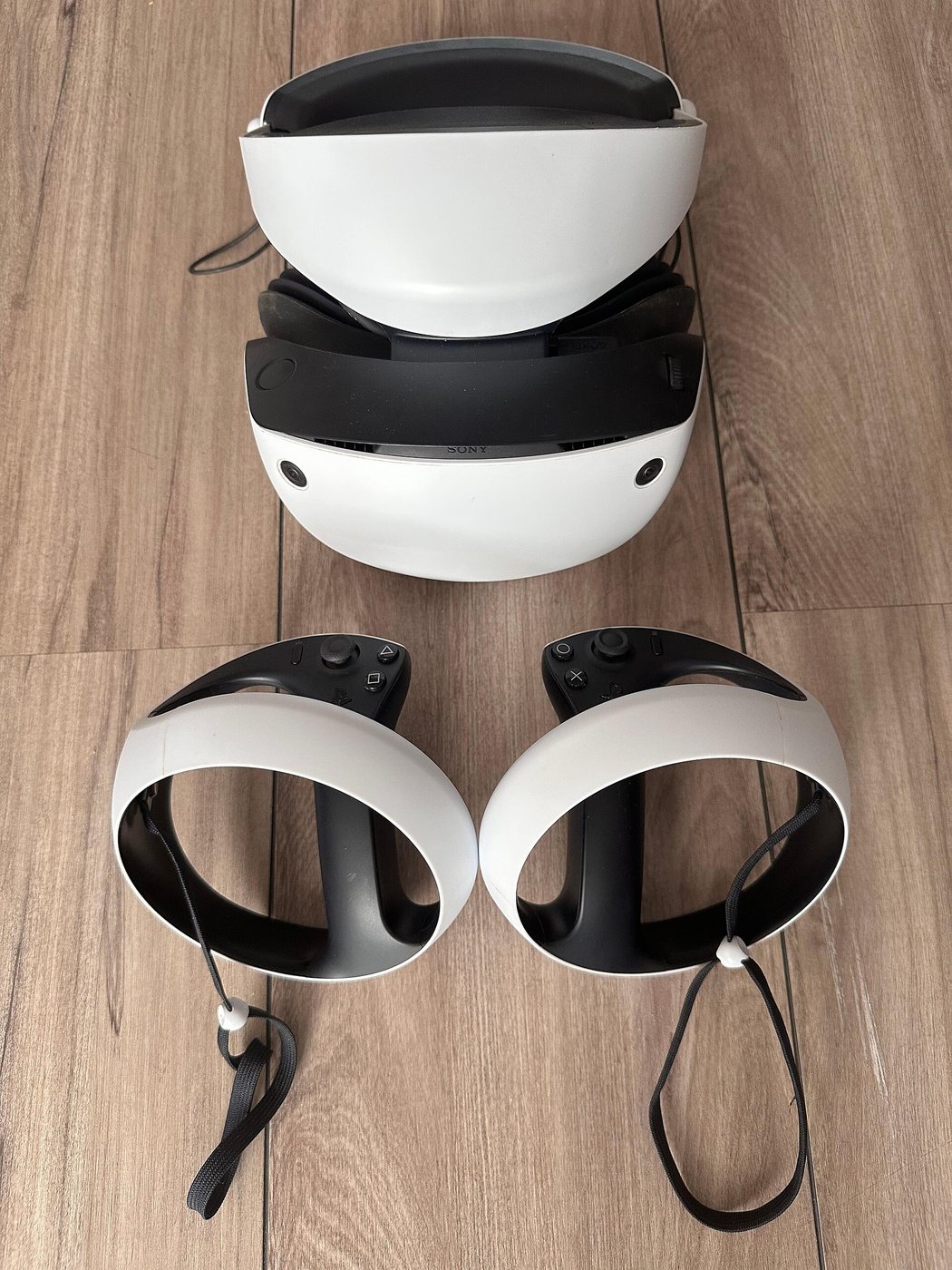
PlayStation VR2
Sony
On sale
$399.99 list
US list since the 2025 cut from $549.99. Sony sold it at $299.99 from 30 July to 10 August 2026. Street prices in October sit around $300 to $400.
OLED headset for PS5, with a PC path through Sony’s adapter. Eye tracking, HDR, headset haptics, and adaptive triggers stay on the console.
Type
PS5, or a Windows PC with the adapter
Display
OLED HDR, 2000 x 2040 per eye
Field of view
About 110°
Refresh
90 and 120 Hz
Tracking
Inside-out cameras on the headset. Eye tracking
Weight
About 560 g, cables excluded
In the box
Two Sense controllers, stereo headphones
PC adapter
Sold separately, about $60. On PC you lose eye tracking, HDR, headset haptics, and adaptive triggers
Needs
A PS5 for the full feature set. The console is not in the price
Sony product specs. PlayStation Direct list price. UploadVR, 30 July 2026, for the $299.99 sale. Source
PICO announcement graphic
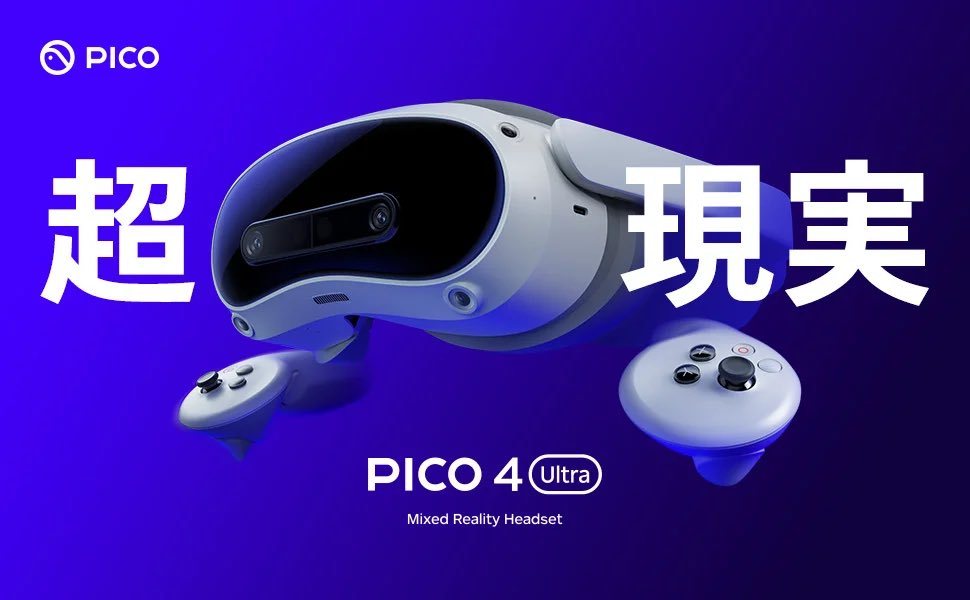
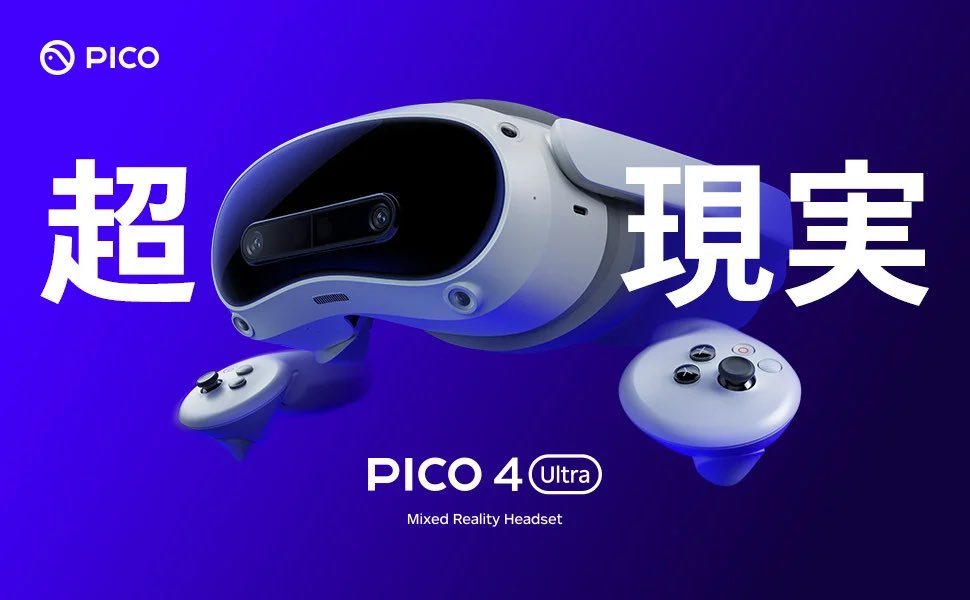
Pico 4 Ultra
Pico (ByteDance)
Not in the US
About €550 to €600
Europe street price in October 2026. Launch RRP was €599 / £529. Pico does not sell this consumer model in the United States. Enterprise MSRP is $850 (12 GB) or $1,199 (16 GB).
Standalone mixed-reality headset sold in Europe and Asia-Pacific. Pancake panels, color passthrough, and ringless controllers. No eye tracking.
Type
Standalone, plus PC VR through Pico Connect
Chip
Snapdragon XR2 Gen 2, 12 GB RAM, 256 GB
Display
LCD, 2160 x 2160 per eye
Optics
Pancake, IPD 58 to 72 mm
Field of view
105°
Refresh
90 Hz
Passthrough
Two 32 MP color cameras and an iToF depth sensor
Weight
About 580 g
Battery
5700 mAh, 45 W charging
Radio
Wi-Fi 7
In the box
Ringless controllers and AA batteries
Pico spec pages, summarized by BestInXR on 3 September 2026. European shop prices checked 14 October 2026. Source
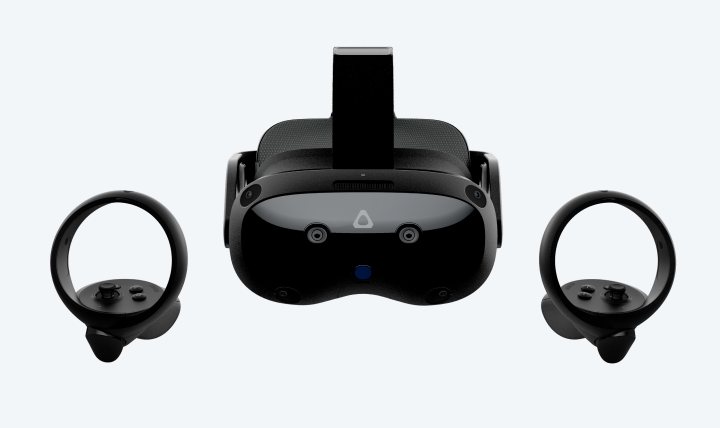
HTC
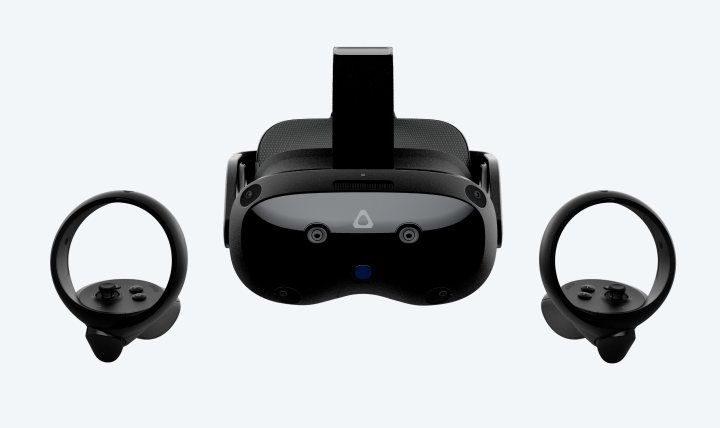
HTC Vive Focus Vision
HTC
On sale
$999
US consumer price. Business Edition is $1,649 and adds two years of Vive Business coverage. A Wired Streaming Kit for DisplayPort is extra.
Standalone headset that can also run as a PC headset. Eye tracking is built in. The panels are still fresnel, and the chip is the first Snapdragon XR2.
Type
Standalone, or PC VR over USB-C. DisplayPort needs the streaming kit
Chip
Snapdragon XR2, 12 GB RAM, 128 GB plus microSD up to 2 TB
Display
LCD, 2448 x 2448 per eye
Optics
Fresnel, motorized IPD 57 to 72 mm
Field of view
Up to 120°
Refresh
90 Hz standalone. 120 Hz in DisplayPort mode, marked beta
Tracking
Inside-out, plus eye tracking at 120 Hz
Passthrough
Color, two 16 MP cameras
In the box
Headset, battery, two controllers, 30 W adapter
HTC Vive Focus Vision specs. Vive US store prices checked September 2026. Source
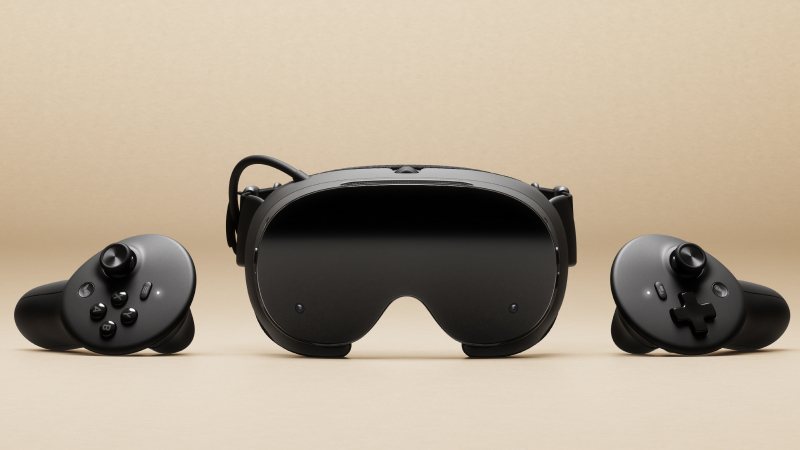
Valve
Valve Steam Frame
Valve
Waitlist
$1,059 / $1,299
US launch prices for 256 GB and 1 TB. Reservations opened 14 September 2026. On 14 October the store was a waitlist, not an open cart. A 45 W charger is not in the box ($29 from Valve, or any 45 W USB-C charger).
Valve’s current headset. It streams a Steam library over a wireless adapter and also plays a smaller set of games on the headset itself. No base stations.
Type
Standalone on SteamOS, plus wireless PC streaming
Chip
Snapdragon 8 Gen 3, 16 GB LPDDR5X
Storage
256 GB with microSD, or 1 TB
Display
LCD, 2160 x 2160 per eye, pancake lenses
Refresh
72 to 144 Hz. 144 Hz is marked experimental
Tracking
Inside-out cameras. No Lighthouse support
Radio
Wi-Fi 7 on the headset. Wi-Fi 6E adapter in the box
Battery
21.6 Wh
Audio
Two drivers per ear, two microphones, Bluetooth 5.4
In the box
Steam Frame controllers and a copy of Half-Life: Alyx
Reported, not on Valve’s spec list
About 440 g with the strap, about 110° horizontal, IPD about 60 to 70 mm
Steam Frame store page and Steam Hardware news, 14 September 2026. Weight and field of view from BestInXR and VRcompare, not from Valve’s bullet list. Source
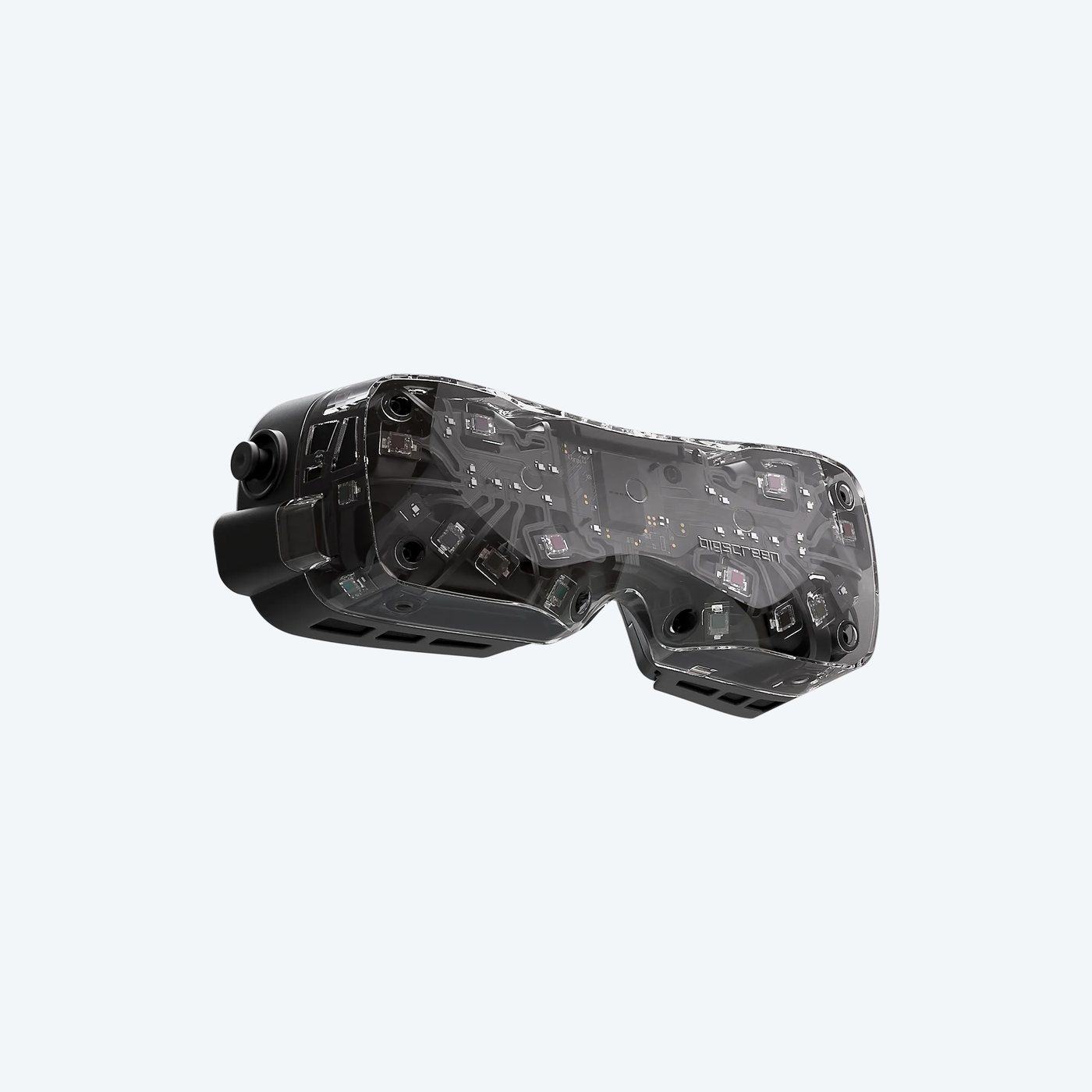
Bigscreen
Bigscreen Beyond 2
Bigscreen
On sale
$959
Headset only, from the 31 August 2026 cut (was $1,019). Base stations, controllers, and audio are extra. A realistic Lighthouse room adds about $460 in base stations before controllers.
Very small micro-OLED PC headset. 107 grams without the strap. It does not track itself. You bring SteamVR base stations and controllers.
Type
Tethered PC VR, DisplayPort 1.4
Display
Micro-OLED, 2560 x 2560 per eye, 32 PPD peak
Optics
Pancake
Field of view
116° diagonal
Refresh
75 Hz at full resolution, up to 90 Hz
Tracking
SteamVR 1.0 or 2.0 base stations, not included
IPD
Adjustable, about 48 to 75 mm
Weight
107 g without the strap
Eye tracking
No. That is the Beyond 2e
Audio
None built in. Audio Strap is a separate purchase
In the box
Headset and strap. No controllers, no base stations
Bigscreen, 31 August 2026 price post. Road to VR, 2 September 2026. Bigscreen spec page. Source
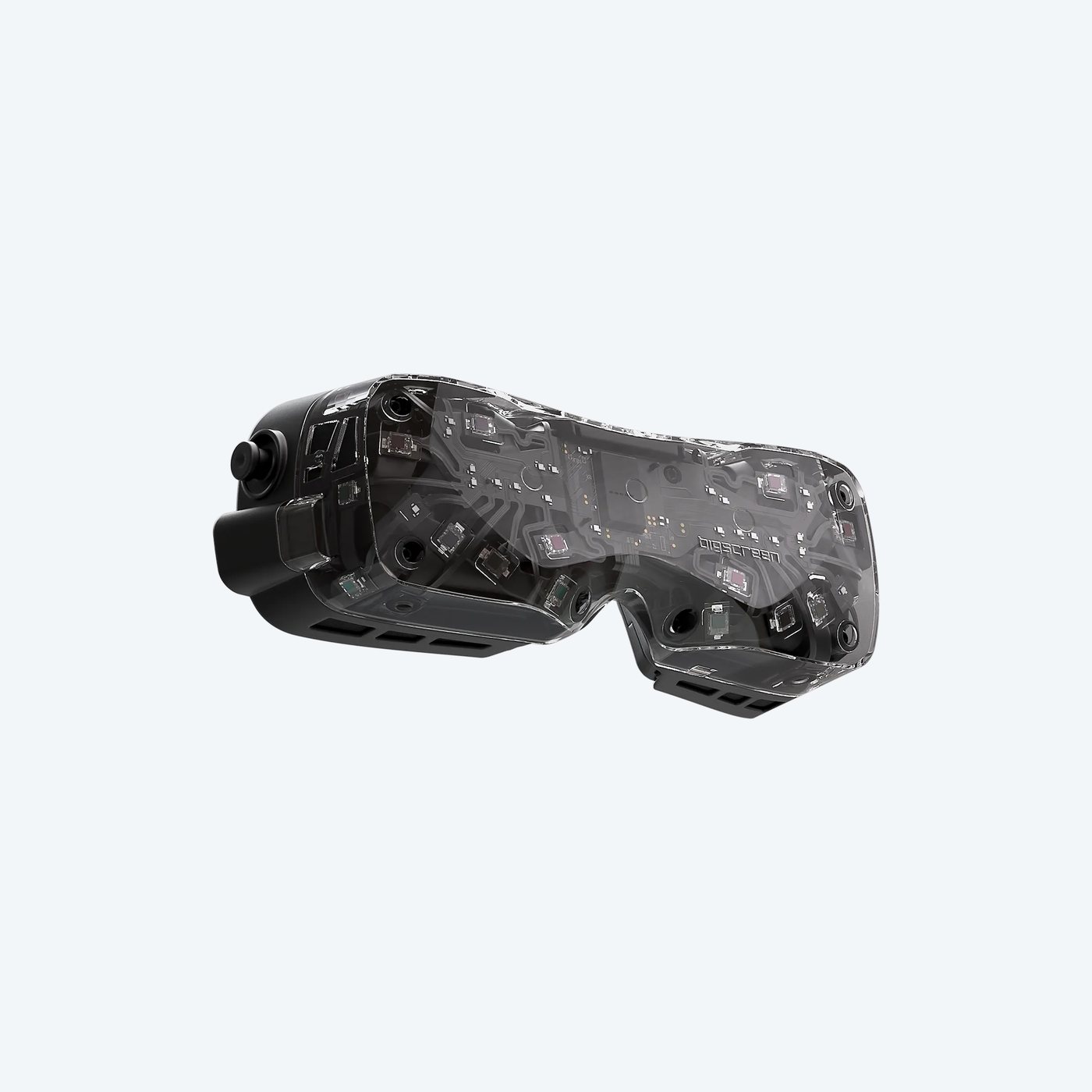
Bigscreen. Same shell as Beyond 2; eye tracking is inside
Bigscreen Beyond 2e
Bigscreen
On sale
$1,159
Headset only, from the 31 August 2026 cut (was $1,219). Same extra cost for base stations and controllers as the Beyond 2.
The Beyond 2 with eye tracking, for SteamVR dynamic foveated rendering. Eye tracking cannot be added to a plain Beyond 2 later.
Type
Tethered PC VR, DisplayPort 1.4
Display
Micro-OLED, 2560 x 2560 per eye
Field of view
116° diagonal
Refresh
75 Hz at full resolution, up to 90 Hz
Tracking
SteamVR base stations required, not included
Eye tracking
Yes
Weight
About 107 to 108 g without the strap
In the box
Headset only. No controllers, no base stations
Bigscreen price post, 31 August 2026. Road to VR, 2 September 2026. Source
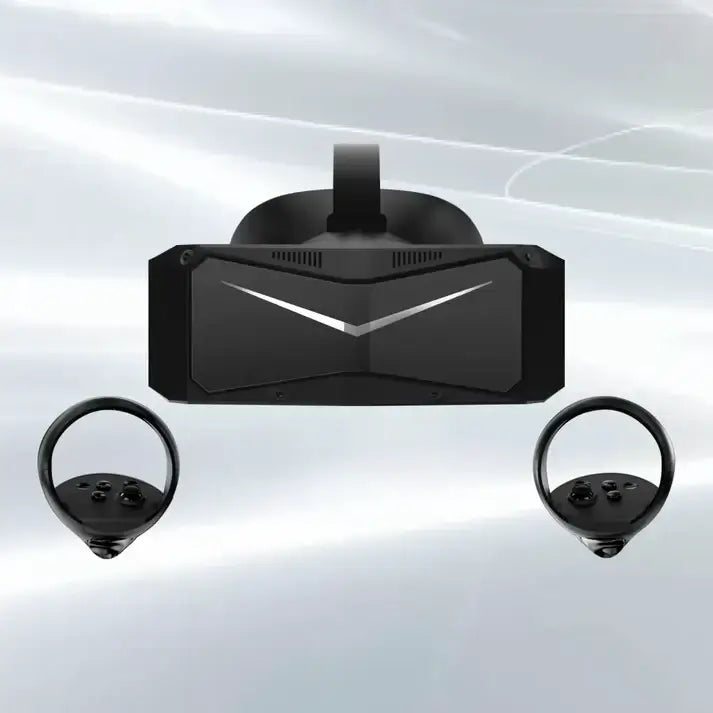
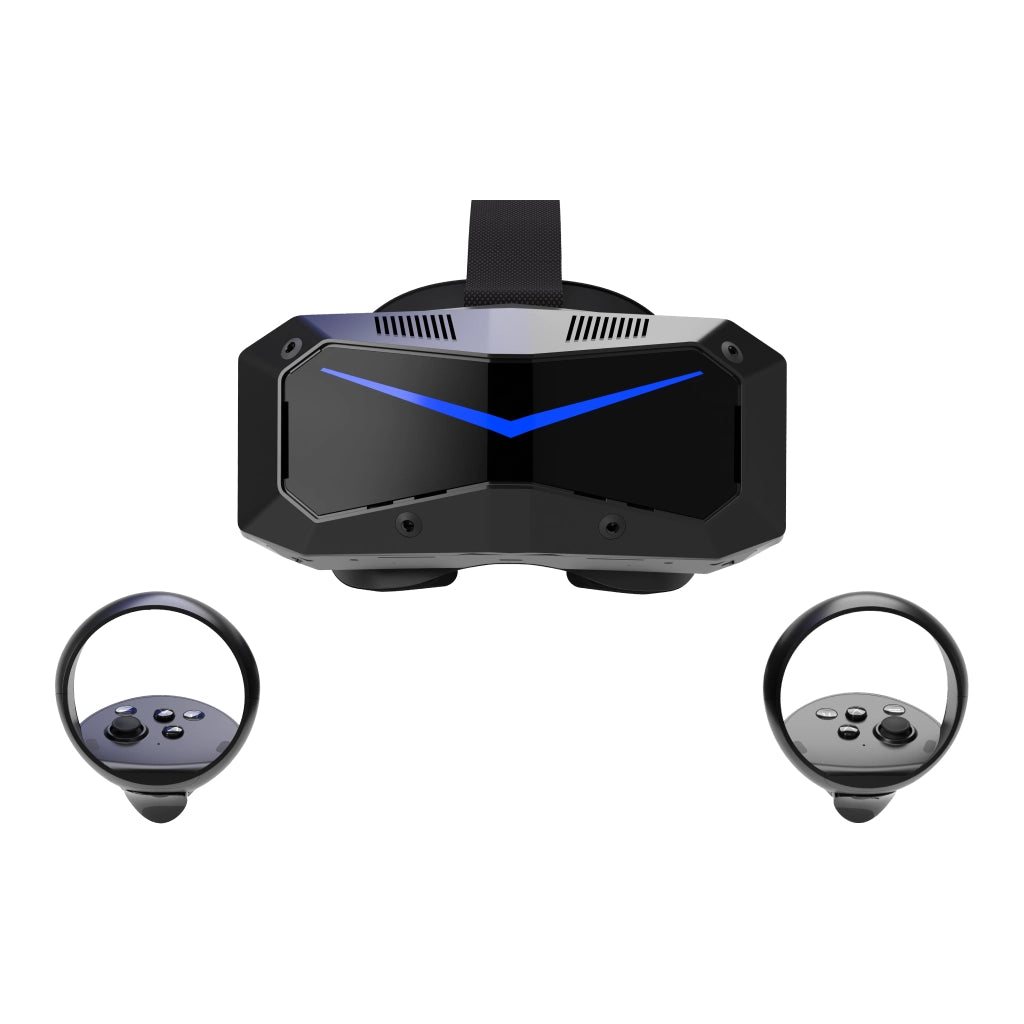
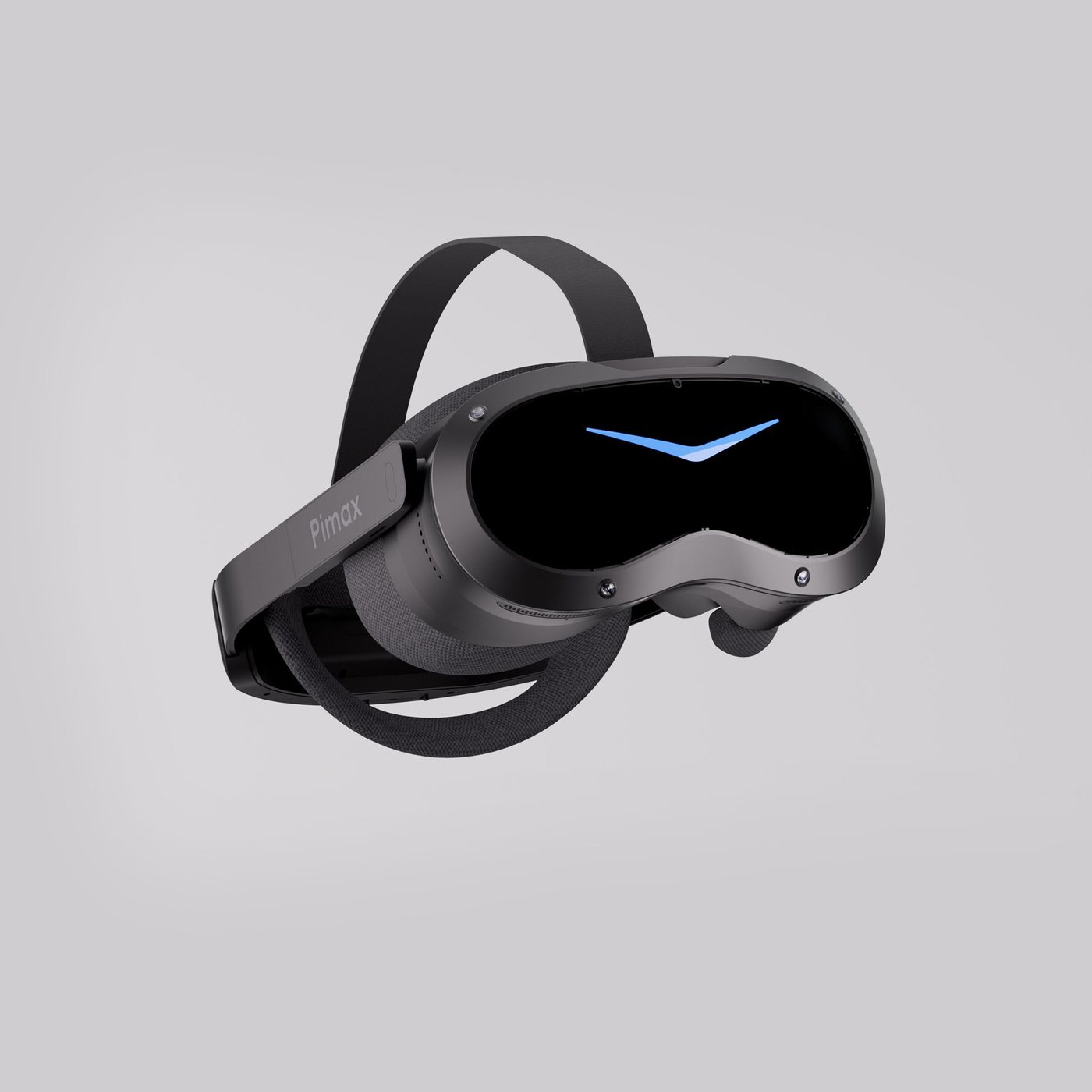
Pimax
Pimax Crystal Light
Pimax
On sale
$899
US Pimax store price in 2026, controllers included. A Lighthouse faceplate is optional and extra.
Pimax’s volume PC headset. Sharp QLED panels and glass lenses, no eye tracking, and a heavy shell compared with the Dream Air.
Type
Tethered PC VR, DisplayPort
Display
QLED with mini-LED local dimming, 2880 x 2880 per eye, 35 PPD
Optics
Glass aspheric
Field of view
About 110° horizontal. Some Pimax sheets say up to 115°
Refresh
72, 90, and 120 Hz
Tracking
Inside-out SLAM. Optional Lighthouse faceplate
Eye tracking
No
IPD
58 to 72 mm, manual
Weight
About 815 g
GPU
Pimax lists RTX 2080 as a minimum and RTX 3070 or better as recommended
In the box
Two controllers
Pimax store and the August 2026 Pimax buying guide. Pimax Crystal Light wiki check, September 2026, for the $899 tag. Source
Pimax
Pimax Crystal Super
Pimax
On sale
$1,599 to $2,199
QLED engines have been listed from $1,599. The Micro-OLED engine is $2,199. Pimax’s store header has also shown $1,799 to $2,199. Confirm the engine on the product page before paying.
Modular wide-view PC headset. You pick an optical engine. QLED engines trade field of view against pixels per degree. The Micro-OLED engine is the dark-scene option.
Type
Tethered PC VR, DisplayPort
QLED engines
3840 x 3840 per eye. 50 PPD at about 127°, 57 PPD at about 106°, or ultrawide at about 140°
Micro-OLED engine
3840 x 3552 per eye, about 116° horizontal, about 600 g for that engine
Refresh
72 and 90 Hz
Optics
Glass aspheric on the QLED engines
Tracking
Inside-out SLAM, Lighthouse optional
Eye tracking
Yes, used for dynamic foveated rendering
IPD
58 to 72 mm, automatic
GPU
Pimax still lists an RTX 2080 minimum. The panels expect an RTX 4080, 4090, or 5090 for a full-detail image
In the box
Two controllers on the standard kit
Pimax store and Pimax’s April 2026 Dream Air versus Crystal Super note. Pimax buying guide, 11 August 2026. Source
Pimax
Pimax Dream Air SE
Pimax
On sale
$899 / $1,199
Lighthouse headset only is $899. SLAM with controllers is $1,199. Pimax has still marked some SE configurations as pre-order, so check the cart.
The smaller, cheaper Dream Air. Micro-OLED, eye tracking, and a headset under 140 grams. The Lighthouse version does not include controllers.
Type
Tethered PC VR, DisplayPort
Display
Micro-OLED, 2560 x 2560 per eye
Field of view
About 105° horizontal
Refresh
Up to 90 Hz
Tracking
Lighthouse, or inside-out SLAM
Eye tracking
Yes
Weight
Under 140 g for the headset
In the box
Controllers only on the SLAM version
Pimax store listing, checked October 2026. Pimax buying guide for the split price. Source
Pimax
Pimax Dream Air
Pimax
On sale
$1,999 / $2,299
Lighthouse version is $1,999 for the headset only. SLAM version is $2,299 and includes two controllers. Both were listed in stock on Pimax in October 2026.
Sony micro-OLED in a headset under 170 grams. This is Pimax’s high end for people who care about weight. The Lighthouse model still needs your own controllers and base stations.
Type
Tethered PC VR, DisplayPort
Display
Sony micro-OLED, 3840 x 3552 per eye
Optics
ConcaveView pancake
Field of view
About 110° horizontal
Refresh
72 and 90 Hz
Tracking
Lighthouse, or inside-out SLAM on the higher kit
Eye tracking
Yes
IPD
58 to 72 mm, automatic
Weight
Under 170 g for the headset
Audio
Integrated off-ear speakers
In the box
Controllers only on the SLAM version
Pimax Dream Air product page and the 2026 buying guide. In-stock check cited 9 October 2026. Source
Samsung Newsroom
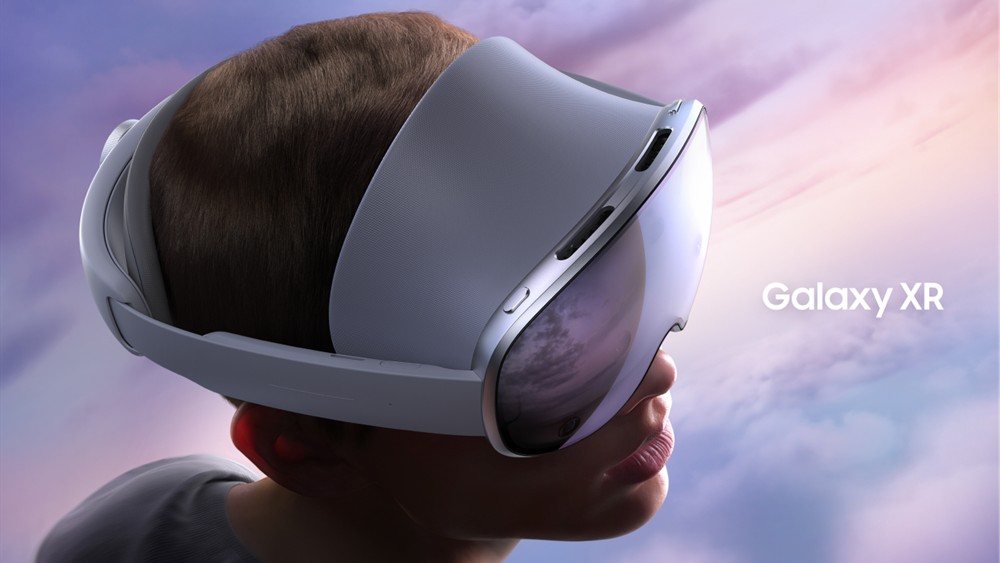
Samsung Galaxy XR
Samsung
On sale
$1,799.99
US list, 256 GB, unchanged from the October 2025 launch as of September 2026. Controllers are $249.99 extra. UK RRP is £1,699. Not sold in Canada.
The first Android XR headset, built with Google and Qualcomm. Micro-OLED, eye and hand tracking, and an external battery. It ships without controllers.
Type
Standalone mixed reality
Chip
Snapdragon XR2+ Gen 2, 16 GB RAM, 256 GB
Display
Micro-OLED, 3552 x 3840 per eye, about 27 million pixels
Optics
Pancake, motorized IPD 54 to 70 mm
Field of view
109° horizontal, 100° vertical
Refresh
Up to 90 Hz
Tracking
Inside-out, eye tracking, hand tracking
Weight
545 g with the forehead cushion, plus a 302 g battery pack
Battery
About 2 hours general use, about 2.5 hours of video
Radio
Wi-Fi 7, Bluetooth 5.4
Software
Android XR
Sold in
United States, South Korea, and the United Kingdom
In the box
Headset and battery. Controllers sold separately
Samsung spec table and Wikipedia, checked against BestInXR on 3 September 2026. Source
AzureSaturn, CC0, Wikimedia Commons
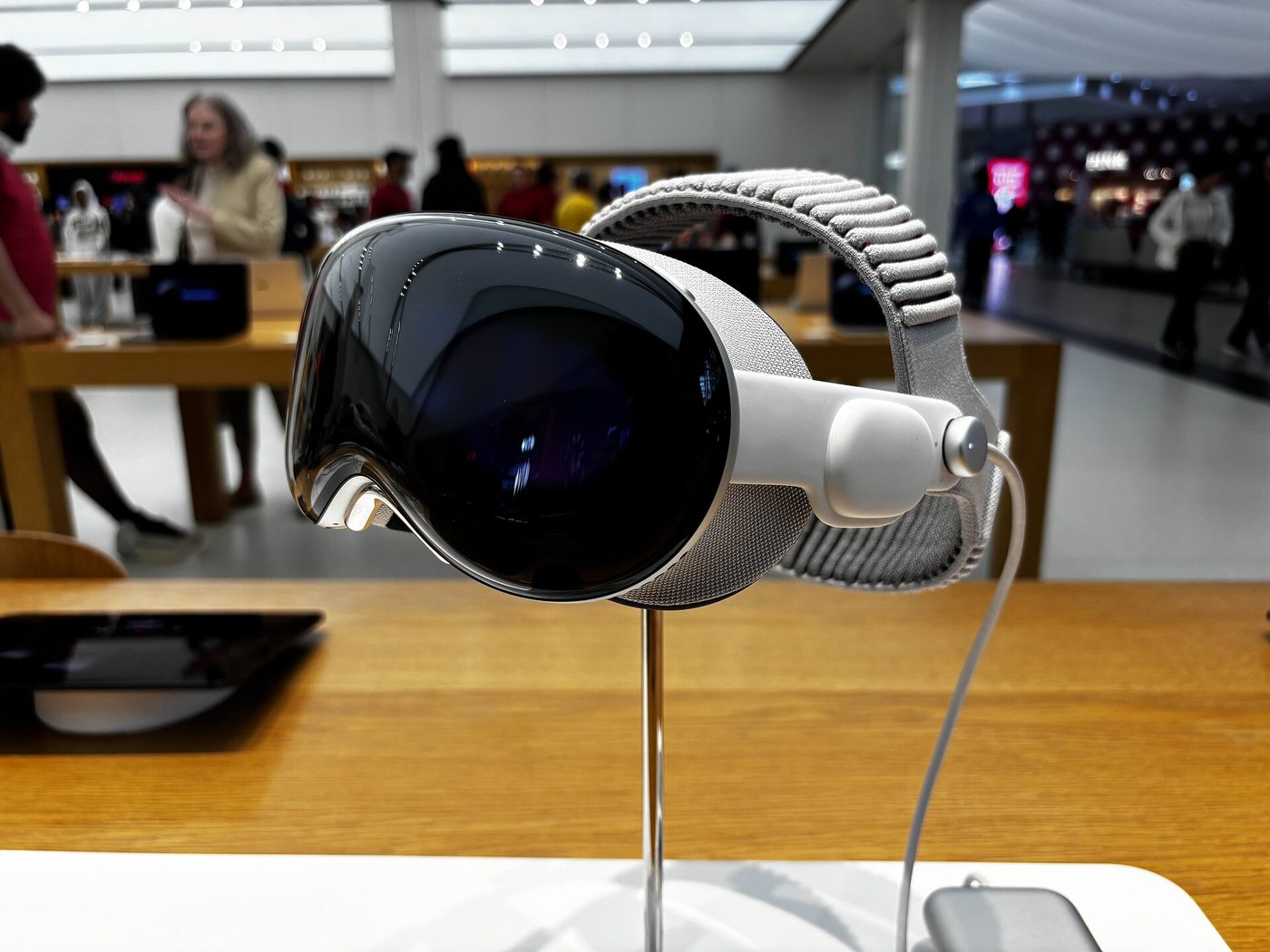
Apple Vision Pro (M5)
Apple
On sale
$3,699 / $3,899 / $4,199
US prices for 256 GB, 512 GB, and 1 TB after Apple’s 25 June 2026 increase of $200. The M5 launched at $3,499 on 22 October 2025. There is no Vision Pro 2 on sale.
Apple’s current spatial computer. Micro-OLED, eye and hand tracking, and an external battery. No motion controllers in the box. visionOS, not a SteamVR headset.
Micro-OLED, 23 million pixels, up to 120 Hz. Apple does not publish a per-eye pixel count
Input
Eyes, hands, and voice. No controllers included
Weight
About 750 to 800 g with a Light Seal and Dual Knit Band. The battery is about 353 g and is separate
Battery
Up to 2.5 hours general use, up to 3 hours of video
Cameras
Stereoscopic main camera, passthrough, and eye tracking
Apple’s October 2025 M5 announcement. EveryMac price note for the 25 June 2026 increase, updated 3 October 2026. Source
Varjo
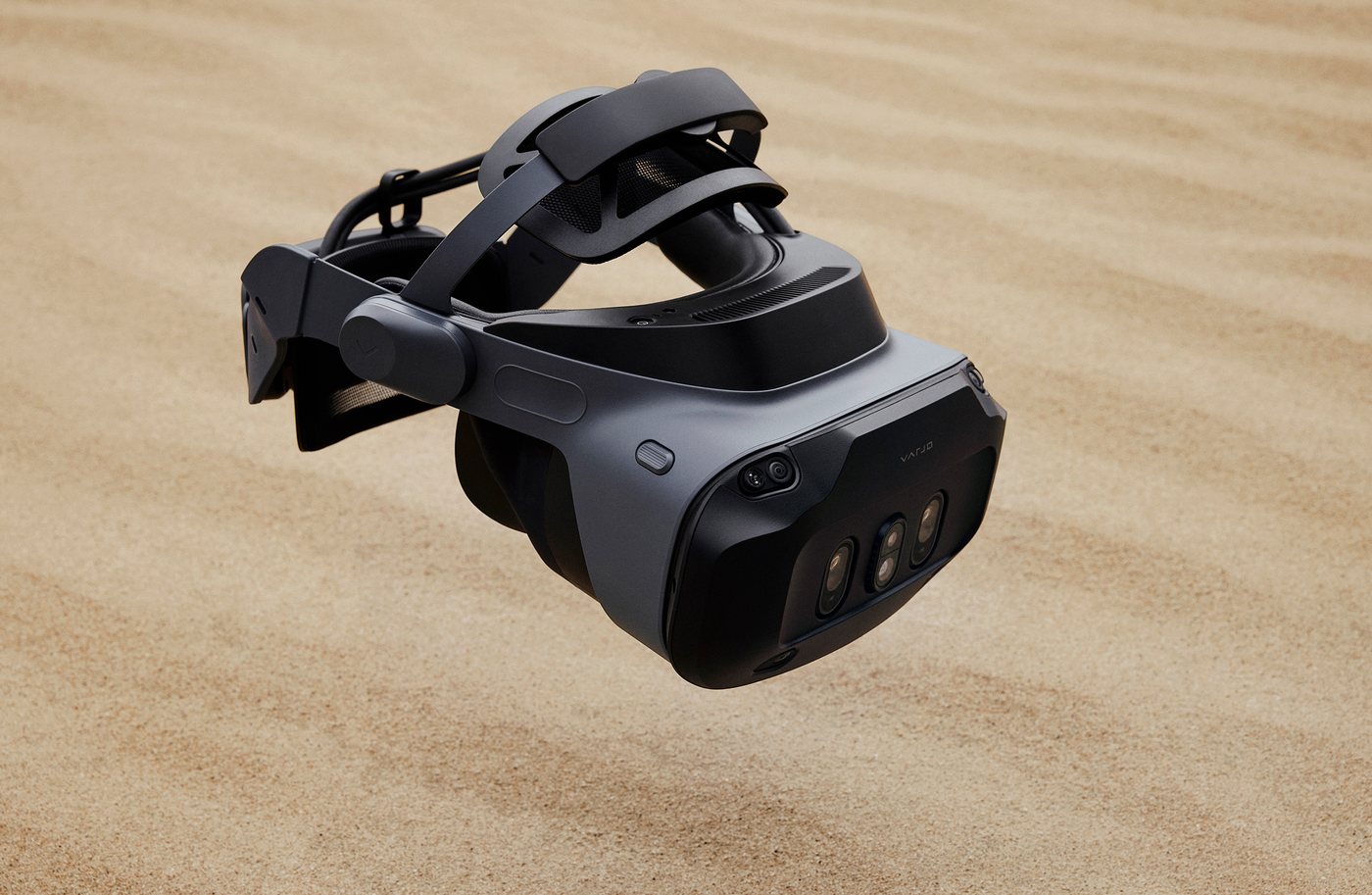
Varjo XR-4 series (2026)
Varjo
On sale
On quote, channel from $7,689
Varjo sells by quote. A US channel listed the 2026 XR-4 from $7,689, the Focal Edition from $15,389, and the Secure Edition from $29,689. Those are reseller figures, not a public Varjo list price. The 2023 launch prices were $3,990 and $9,990 for Focal.
Enterprise mixed-reality headset for simulation and training. High, even pixels per degree, LiDAR, and a Focal model whose passthrough refocuses where you look.
Type
Tethered PC mixed reality. DisplayPort and USB-C
Display
Mini-LED, 3840 x 3744 per eye, 51 PPD
Field of view
120° by 105°
Refresh
90 Hz
Brightness
200 nits, about 10,000:1 with local dimming, 96% DCI-P3
Tracking
Inside-out and SteamVR. Base stations are not required
Eye tracking
200 Hz
Passthrough
Dual 20 MP cameras. About 33 PPD on the standard model, up to 51 PPD with gaze autofocus on Focal
Depth
LiDAR, about 300,000 points, 7 m
IPD
56 to 72 mm, automatic
Weight
About 1,021 g on the 2026 distributor sheet
In the box
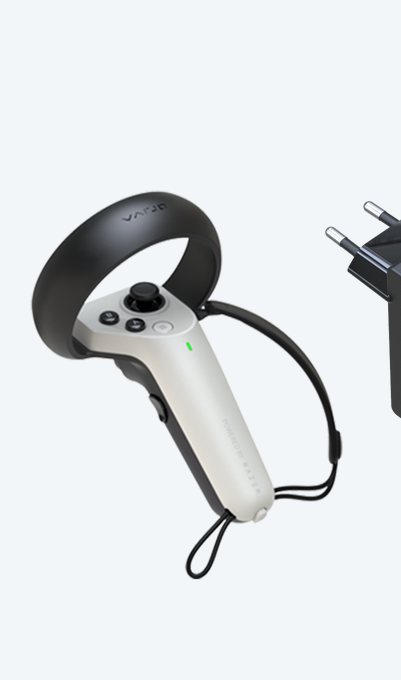
Controllers (Razer on this series)
Varjo XR-4 series datasheet. Ask Corporation’s XR-4 2026 sheet for weight. ChannelXR 2026 channel prices. Source
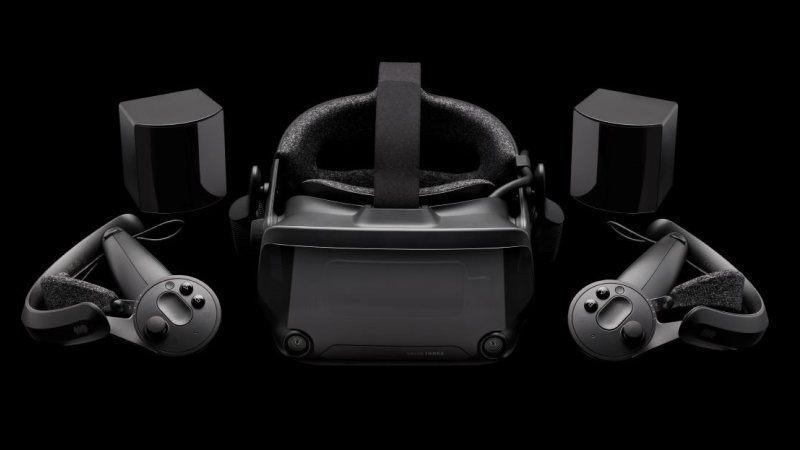
Valve
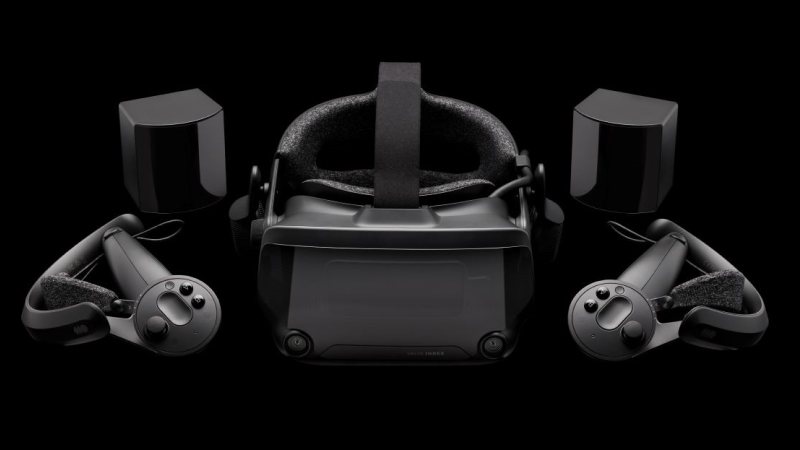
Valve Index headset
Valve
Clearance
$399.20
Was $499. Valve ended production on 13 October 2026 and is selling remaining headsets while supplies last. The full kit is gone. This price is the headset alone.
The 2019 tethered headset, now a clearance item. Still supported in SteamVR. It needs base stations, and Index controllers are mostly gone from Valve’s own store.
Type
Tethered PC VR
Display
Dual LCD, 1440 x 1600 per eye, full RGB
Refresh
80, 90, 120, and 144 Hz
Optics
Dual-element canted lenses
IPD
58 to 70 mm, physical
Tracking
SteamVR 1.0 and 2.0 base stations, not included
Cameras
Stereo 960 x 960, global shutter
In the box
Headset only at this price
Valve Index Sunset, Steam, 13 October 2026. Source
Pimax
Pimax Crystal Pro
Pimax
Announced
$1,399
Announced 6 October 2026. $1,899 with the third-generation 60 GHz Airlink, or $599 for that kit alone. Shipping is planned for spring 2027. A $1 reservation takes $20 off, or $50 off the bundle.
Announced wireless PC headset. It is not a product you can take home this month. Panels are QLED, not the Dream Air’s micro-OLED.
Type
Wireless PC VR, plus wired DisplayPort
Display
QLED, 2880 x 2880 per eye, about 35 PPD
Optics
Aspheric glass, about 110°
Refresh
72, 90, and 120 Hz. Full 120 Hz is described on the wired connection
Tracking
Inside-out SLAM 2.0, eye tracking at 120 Hz. Optional Lighthouse faceplate
Wireless
Wi-Fi 6E dongle included. Optional 60 GHz Airlink, up to 6 Gbps
Jakub T. Jankiewicz, CC BY-SA 4.0, Wikimedia Commons
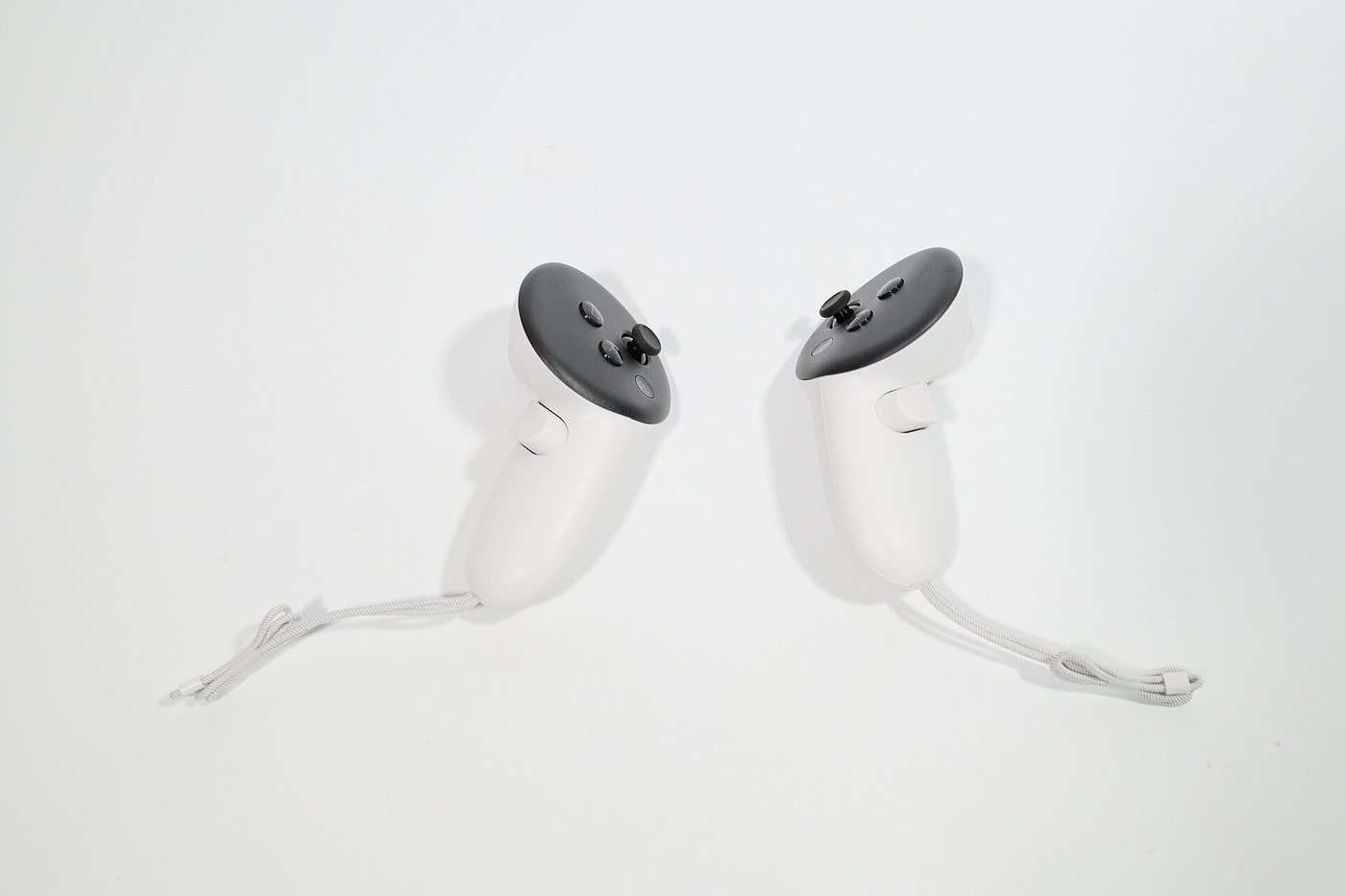
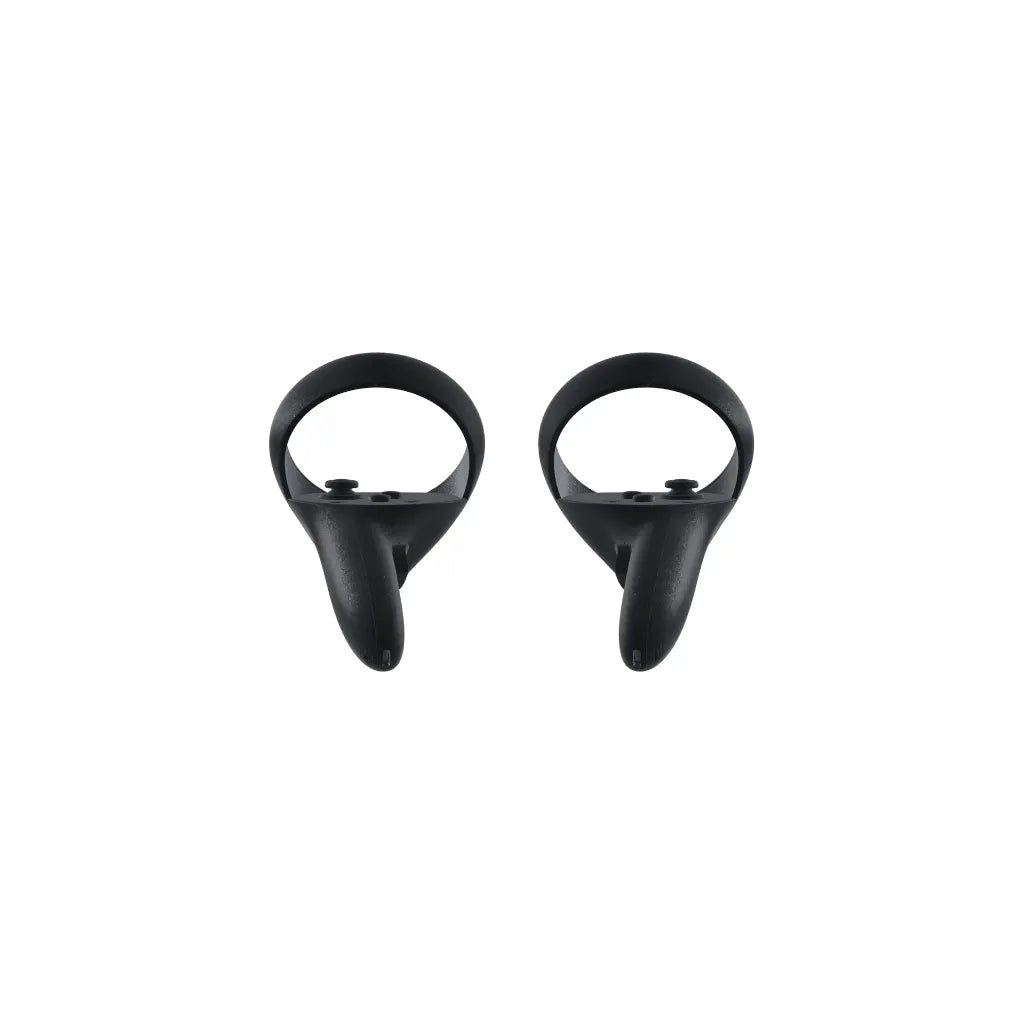
Meta Quest Touch Plus
Meta
On sale
$74.99 each
US Meta Store, left and right sold separately, so a pair of replacements is $149.98. Included with every Quest 3 and Quest 3S. German Meta Store was €84.99 each on 9 October 2026.
Ringless controllers for Quest 3 and Quest 3S. The headset cameras track them. They do not work on Quest 2 or Quest Pro.
Works with
Quest 3 and Quest 3S only
Tracking
Headset cameras, hybrid computer vision
Weight
103 g
Input
A, B, X, Y, thumbstick, thumb rest, two-stage trigger. Capacitive touch and a pinch gesture
Haptics
TruTouch
Sold as
One hand at a time, with a wrist strap
Meta Store Touch Plus page, US price $74.99. Source
Samsung
Samsung Galaxy XR Controllers
Samsung
On sale
$249.99 a pair
US list. Not included with the $1,799.99 headset. Samsung’s own store has shown them unavailable for delivery at times in 2026, so stock is uneven.
Optional ringless 6DoF controllers for Galaxy XR. Hands and eyes are the default input. These add sticks and buttons.
Works with
Galaxy XR
Tracking
Headset cameras, infrared LEDs, 6DoF
Power
Replaceable AA battery
Input
Sticks, face buttons, triggers, haptics
Form
Ringless
Samsung, launch price $249.99. BestInXR recheck, 3 September 2026. Source
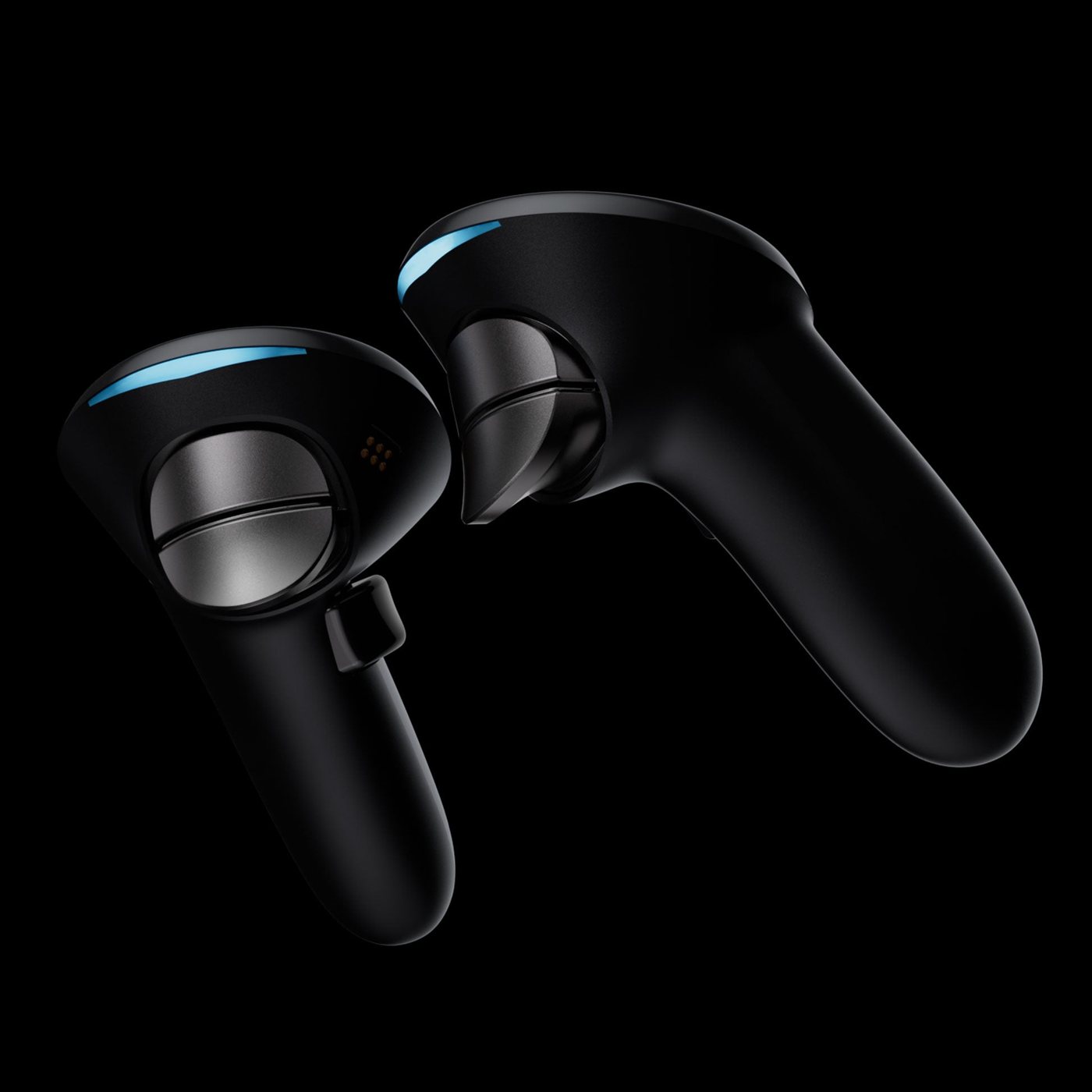
Valve. Included with the headset
Steam Frame controllers
Valve
Waitlist
Included
Part of the $1,059 or $1,299 Steam Frame kit. Valve was not selling them alone on the store page checked 14 October 2026.
Tracked VR controllers that are also a split gamepad, so the same pair can play flatscreen Steam games. They do not use Lighthouse.
Works with
Steam Frame
Tracking
Headset cameras, 6DoF
Input
VR controls plus D-pad, ABXY, sticks, triggers, and bumpers
Sticks
Magnetic, with capacitive finger sensing
Power
One AA per controller, about 40 hours
Compatibility
Valve says they cover the SteamVR catalog on Frame
Was $149 each, $279 a pair. Production ended 13 October 2026. On 14 October the US sunset page listed a left controller at $119.20 and did not list a right. The UK still showed a right at £111.20. Do not count on a matched pair from Valve.
The knuckle controllers with finger tracking. They need SteamVR base stations and a headset that can use them, such as an Index, Vive Pro, or Bigscreen Beyond.
Works with
Valve Index, HTC Vive, Vive Pro, and other SteamVR headsets
Tracking
Lighthouse 1.0 or 2.0
Input
Finger tracking, trigger, stick, face buttons, grip
Needs
Base stations and a PC. Not used by Steam Frame
Valve Index Sunset, 13 October 2026. GamingOnLinux stock check, 14 October 2026. Source
GeorgeM2011, public domain, Wikimedia Commons
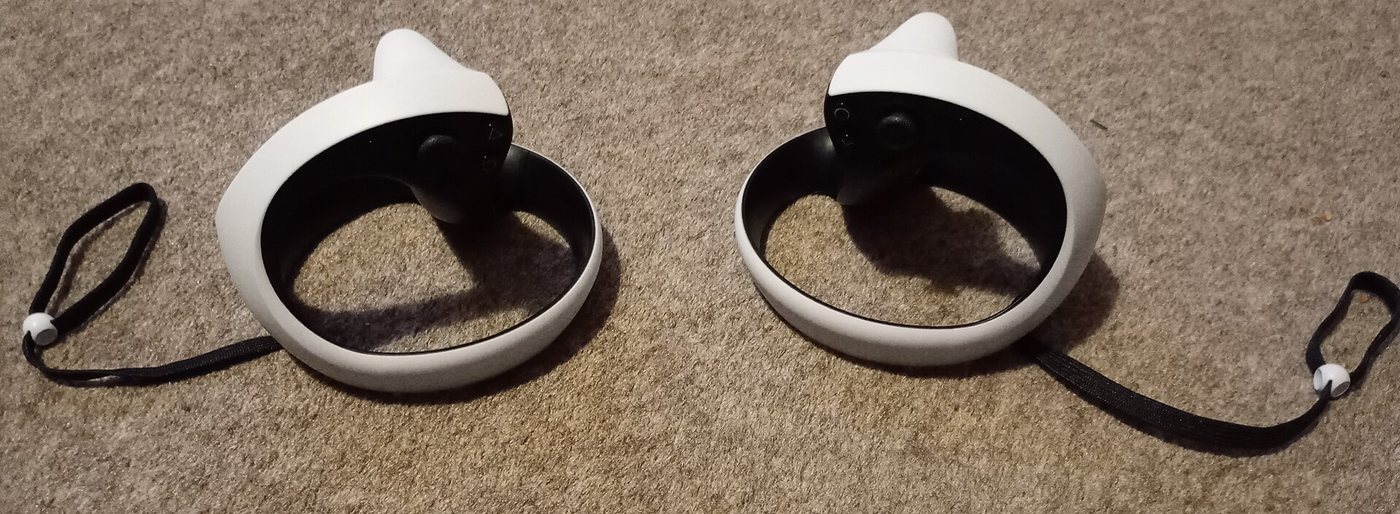
PlayStation VR2 Sense controllers
Sony
On sale
Included, or $249.95
A pair ships with PlayStation VR2. Apple sells a pair plus a charging station for Vision Pro at $249.95, checked 12 October 2026. The charging station alone is $49.99.
Headset-tracked controllers with haptics and adaptive triggers. On PS5 they are the default input. The same hardware also pairs with Vision Pro on visionOS 26 and with SteamVR on Windows.
Works with
PS5 with PSVR2, Windows SteamVR, and Apple Vision Pro on visionOS 26
Tracking
Infrared LEDs read by the headset
Weight
About 168 g each
Input
Stick, grip, trigger, face buttons, finger-touch sensors
Feedback
Haptics and adaptive triggers. Those trigger features are a PS5 function
Power
USB-C, Bluetooth 5.1
Size
137 x 135 x 107 mm each
Sony Sense specifications. Apple US store listing checked 12 October 2026. Source
Pimax
Pimax Crystal controllers
Pimax
On sale
Included with most Pimax kits
Pimax does not publish a separate US price for replacements. They are in the box with Crystal Light, Crystal Super, and Dream Air SLAM. Lighthouse Dream Air and Dream Air SE do not include them.
The ringed controllers shipping with current Pimax headsets. The ringless model announced in October 2026 is not what is in the box today.
Works with
Crystal Light, Crystal Super, Dream Air SLAM, Dream Air SE SLAM
Weight
About 126 g
Battery
About 600 mAh, 4 to 5 hours, USB-C
Input
Face buttons, trigger, grip, thumbstick, tracking ring
Pimax Dream Air FAQ and PC Gamer’s description of the bundled Crystal-style controllers. Source
Pimax
Pimax Ringless VR Controllers
Pimax
Announced
Not announced
Shown 6 October 2026 with Crystal Pro. Pimax says they also work with Crystal Light, Crystal Super, Dream Air, and Dream Air SE. No public price yet.
Announced controllers that track without a ring. They are not the controllers in current Pimax boxes.
Works with
Pimax says Crystal Light, Crystal Super, Dream Air, Dream Air SE, and Crystal Pro
Tracking
Ringless. Pimax has not published the full tracking spec
Packed with Pico 4 Ultra, which is not sold new in the US consumer channel. No separate US list price.
Ringless controllers tracked by the Pico 4 Ultra. They ship with AA batteries.
Works with
Pico 4 Ultra
Tracking
Headset cameras, ringless
Power
AA batteries. Four cells are in the headset box
Pico 4 Ultra retail contents, European listings, October 2026. Source
Varjo
Varjo XR-4 controllers
Varjo / Razer
On sale
Included
Bundled with the XR-4 series. Not sold as a consumer standalone accessory at a published US price.
The controllers Varjo ships with XR-4. The 2026 headset can track them inside-out, so a Lighthouse room is optional.
Works with
Varjo XR-4 series
Tracking
Inside-out. SteamVR tracking is also supported by the headset
Maker
Razer, for this series
Varjo XR-4 series product book. ChannelXR 2026 listing. Source
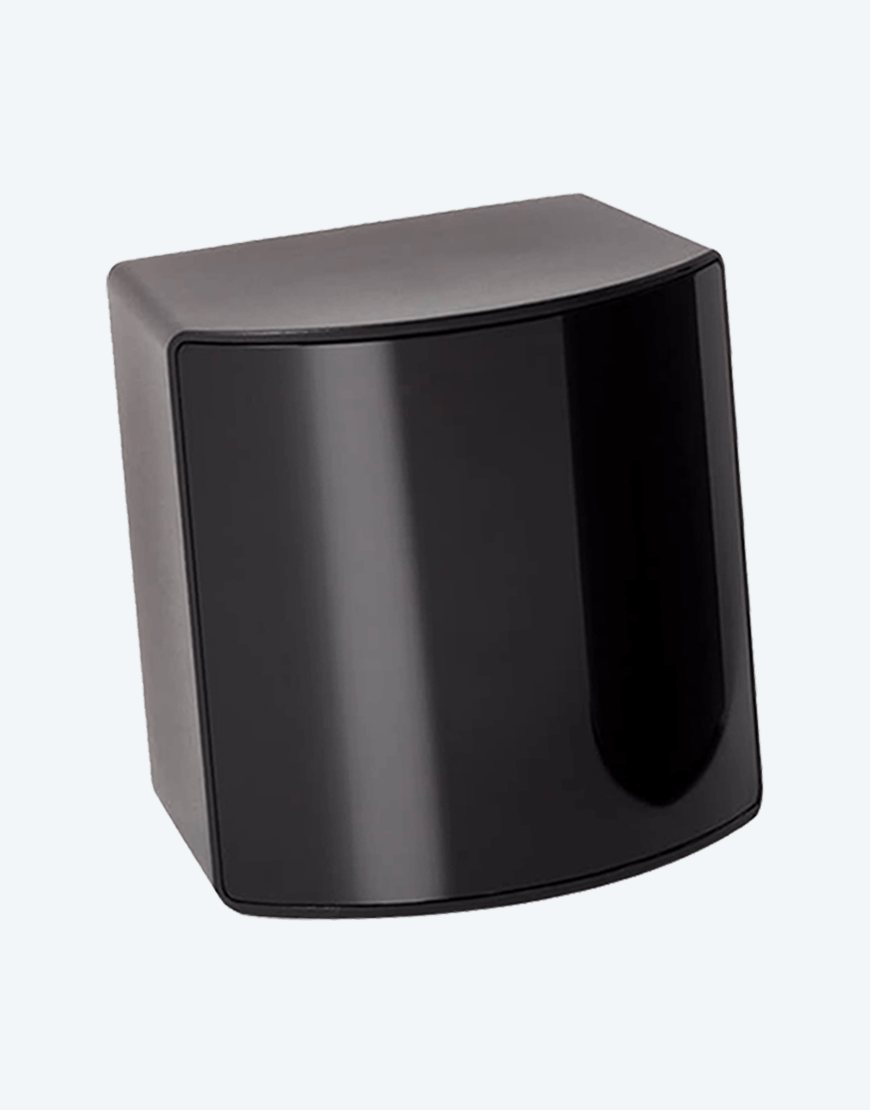
Lighthouses
HTC
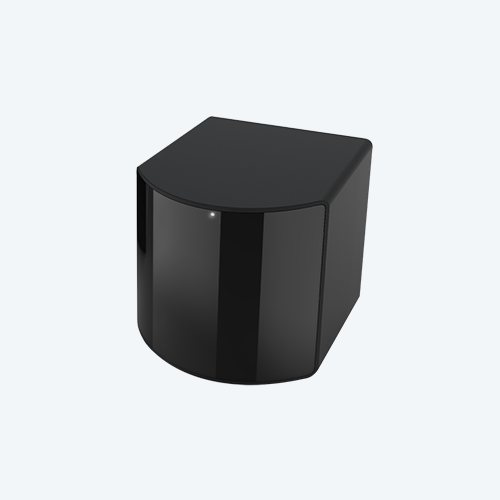
HTC SteamVR Base Station 2.0
HTC
On sale
$229 list, about €210 to €235 in Germany
Vive’s US page lists $229 and has shown Coming Soon. Micro Center listed $229.99. On 14 October 2026 German price search started at €209 to €215. A room wants two, so budget about $460, or about €430, before the headset.
The Lighthouse 2.0 base station you can still buy new. It is the same SteamVR 2.0 system used by Index, Vive Pro, Bigscreen Beyond, and Pimax Lighthouse faceplates. It is not a headset tracker. Trackers are worn; this box sweeps the room with lasers.
System
SteamVR Tracking 2.0, one rotor, wireless sync with other 2.0 stations
Play area
Up to 5 m by 5 m with two stations. Up to 10 m by 10 m with four
In the box
One station and one power adapter. Cord about 2.5 m
Mount
Standard threaded mount. Aim it down into the play space from about 2 m up
Works with
Valve Index, Vive Pro series, Vive Cosmos Elite with the right faceplate, Bigscreen Beyond, Pimax Lighthouse mode, Index controllers, Vive Tracker 2.0 and 3.0
Does not see
Original Vive wands (Controller 1.0) or Vive Tracker 1.0
Vive US Base Station 2.0 page. Micro Center listing. Geizhals and idealo, 14 October 2026. Source
Pimax store photo of the same SteamVR 2.0 station
Valve Index Base Station 2.0
Valve
Clearance
Was $149. Not on the sunset list
Valve’s 13 October 2026 sunset page discounts the Index headset, a left controller, and the tether. It does not list a base station. PC Gamer and GamingOnLinux both reported on 14 October that base stations were not in that clearance. Treat HTC’s 2.0 station as the one you can order.
Valve’s own Lighthouse 2.0 station, sold for years next to the Index at $149. It is the same tracking system as HTC’s 2.0 station. After the Index shutdown, Valve is not offering it as a stocked product.
System
SteamVR Tracking 2.0. Functionally the same generation as the HTC 2.0 station
Last list price
$149 each, when Valve had them
Play area
Two stations for a room, four for a larger space, same limits as the HTC unit
Status
Production of Index hardware has ended. Do not plan a new room around Valve having stock
Valve Index Sunset page, 13 October 2026. PC Gamer and GamingOnLinux, 14 October 2026. Source
Trackers
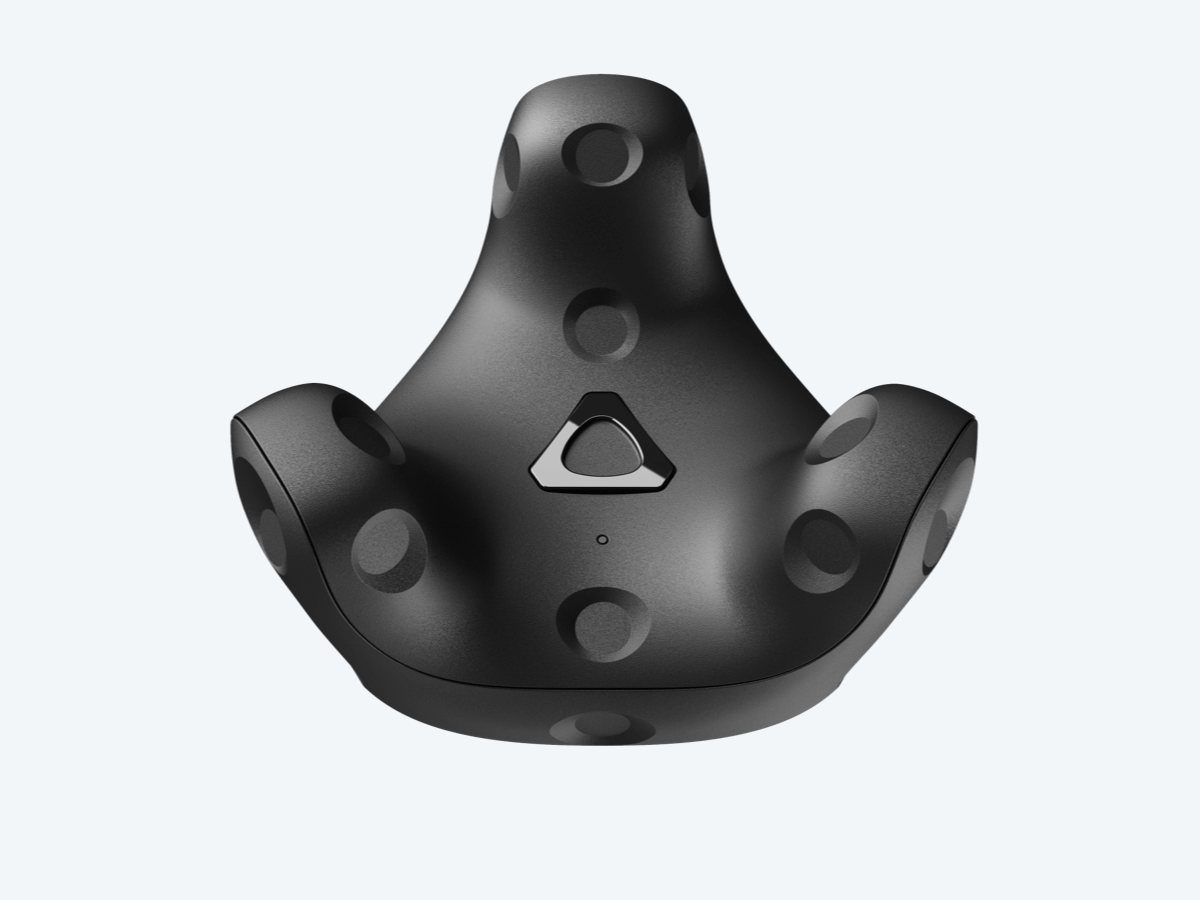
HTC
VIVE Tracker (3.0)
HTC
On sale
$149
US Vive store, 14 October 2026. The wireless dongle and cradle are in the box. Straps are extra.
The standard SteamVR puck. Strap it to a hip, a foot, or a prop. Lasers from the base stations are what locate it in the room.
Tracking
SteamVR Lighthouse, base station 1.0 or 2.0
Needs
Base stations, a USB port for the dongle, and SteamVR
Weight
75 g
Size
70.9 × 79.0 × 44.1 mm
Battery
Up to 7.5 hours. USB-C
Sensor view
240° field of view
In the box
Tracker, dongle, USB-C dongle cradle, USB-C cable
Works with
Vive, Vive Pro, Pro Eye, and Cosmos Elite on HTC’s list. Index, Beyond, and Pimax Lighthouse rooms use the same puck
VIVE Tracker 3.0 spec page. US Vive store price, 14 October 2026. Source
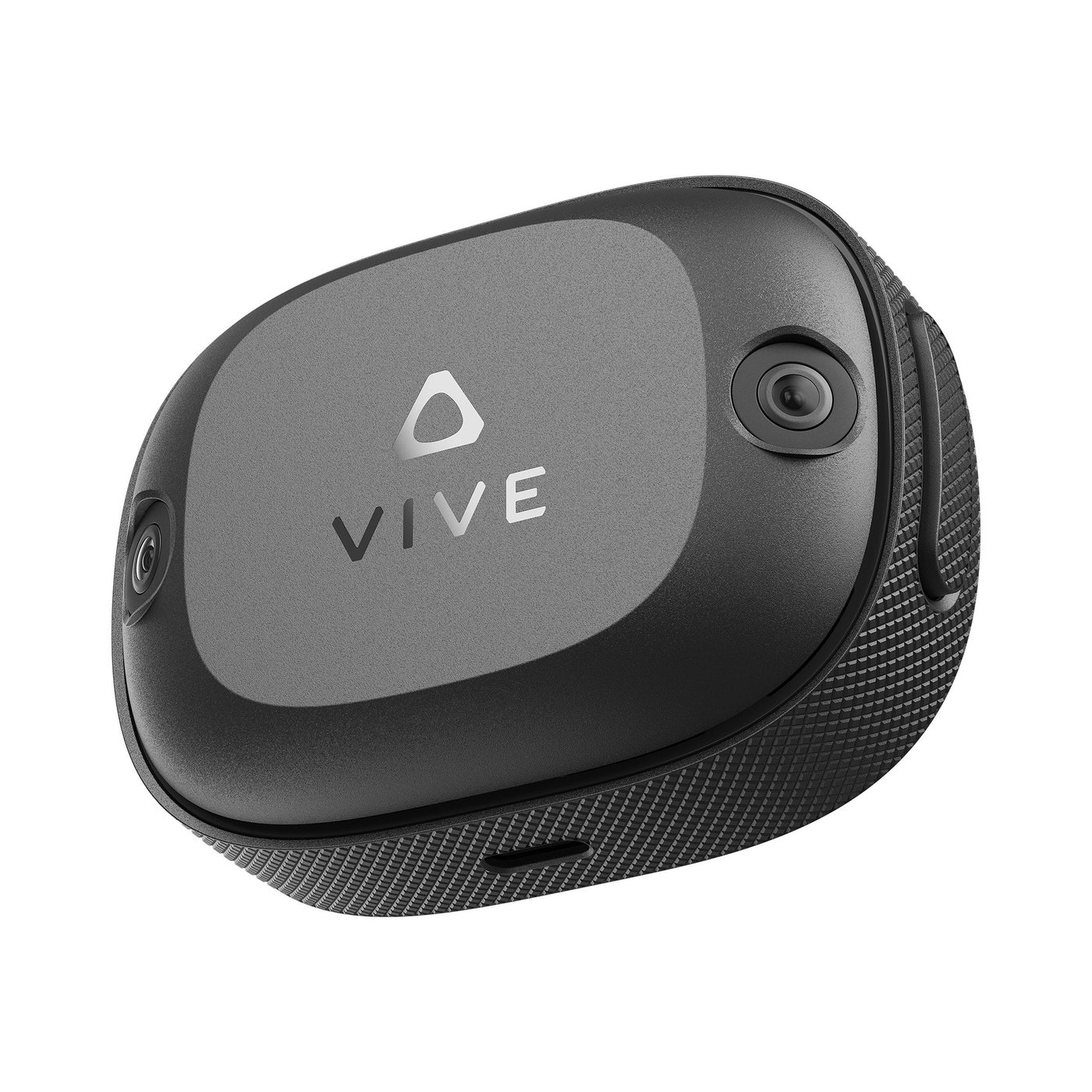
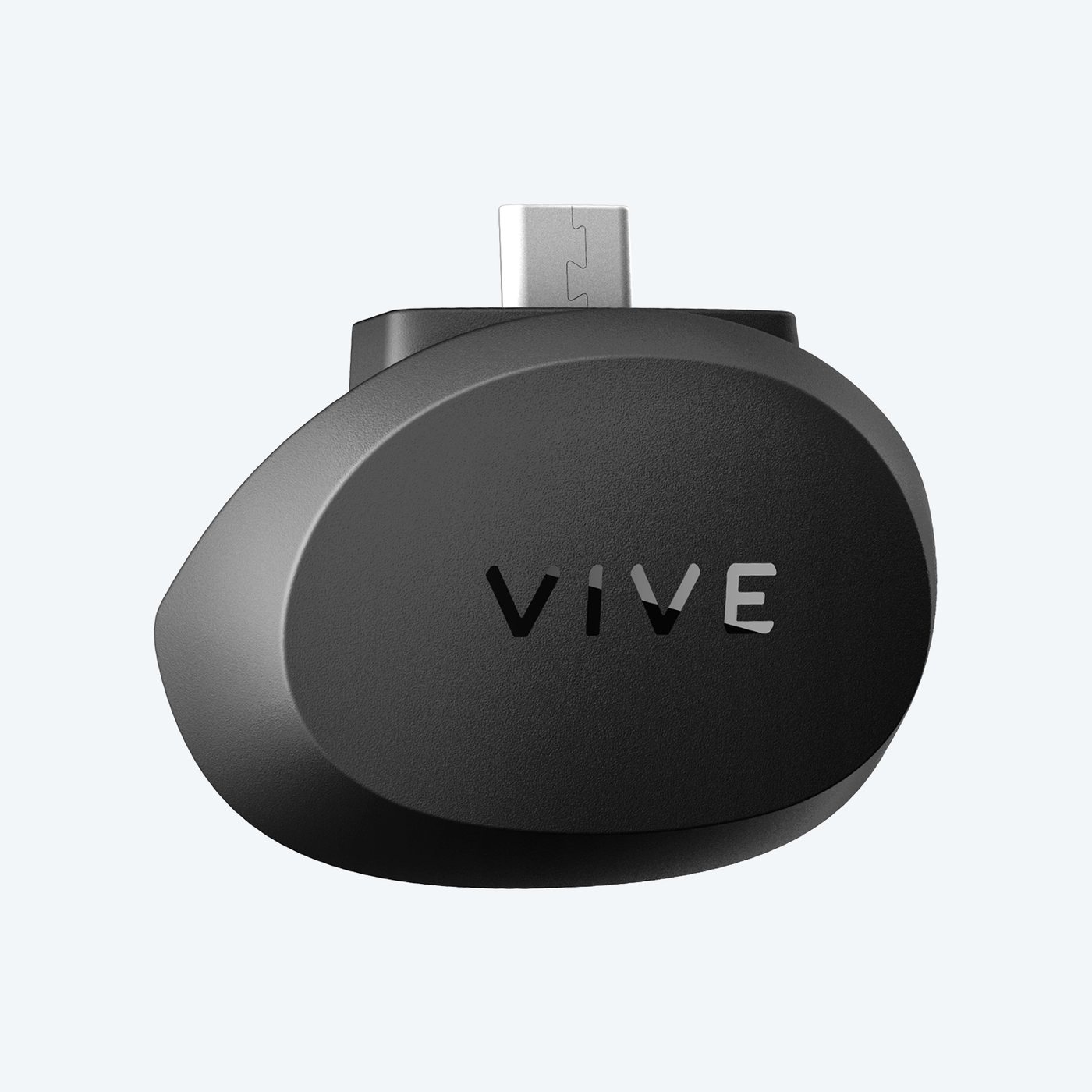
HTC
VIVE Ultimate Tracker
HTC
On sale
$229
One tracker on the US Vive store, 14 October 2026. The Wireless Dongle is $39 and is required. One dongle pairs up to five trackers. The 3+1 kit, three trackers plus one dongle, is $689.
A puck that tracks itself with two wide cameras. It does not use a Lighthouse base station. A single tracker still needs the dongle.
Tracking
Inside-out. Two wide-FOV cameras on the puck
Needs
VIVE Wireless Dongle. It plugs into Focus Vision, Focus 3, or XR Elite, or into a PC for other SteamVR headsets through VIVE Hub
Weight
94 g
Size
77 × 58.6 × 27.3 mm
Battery
Up to 7 hours. About 2.2 hours on Quick Charge 3.0, about 3.2 hours at 5 V / 1 A
Radio
Proprietary 2.4 GHz, plus 5 GHz Wi-Fi
Room
HTC asks for a play area of at least 3 m by 3 m. Low light and direct sun are poor conditions
In the box
Tracker, optional 1/4-inch mount, 120 cm USB-C cable. The dongle is separate
VIVE Ultimate Tracker spec page and US store, 14 October 2026. Source
HTC
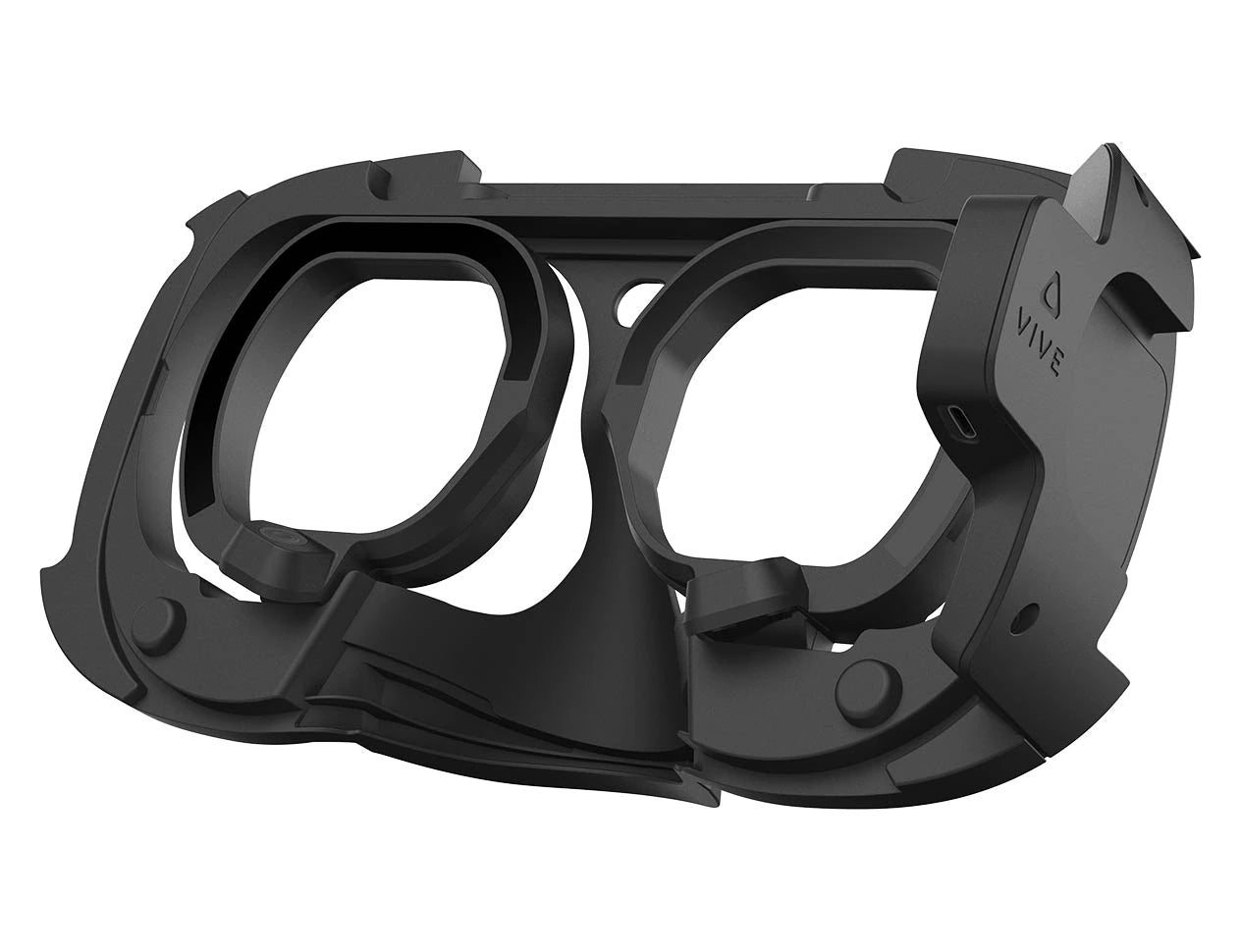
Facial Tracker for VIVE Focus Series
HTC
On sale
$119
US Vive store, add to cart, 14 October 2026.
A small camera that plugs into a Focus headset and watches the mouth, jaw, cheeks, and tongue.
Works with
VIVE Focus Vision and VIVE Focus 3
Sensor
One camera, 60 Hz, 151° diagonal
Output
38 blend shapes across lips, jaw, cheeks, chin, teeth, and tongue
Connection
USB-C into the headset
Weight
11.6 g, plus or minus 1 g
PC VR
OpenXR over VIVE streaming
US Vive store and the Facial Tracker spec page, 14 October 2026. Source
HTC
VIVE Focus 3 Eye Tracker
HTC
On sale
$249
US Vive store, add to cart, 14 October 2026. This module fits the Focus 3. Focus Vision already has eye tracking in the headset.
A magnetic module with two inward cameras. It reports gaze, pupil size, and how open each eye is, which is the path to foveated rendering on a Focus 3.
Works with
VIVE Focus 3
Cameras
Two tracking cameras with infrared illuminators
Rate
120 Hz, both eyes
Accuracy
0.5° to 1.1° inside a 20° field, after a 5-point calibration
Attachment
Magnetic, then USB-C
Weight
54 g, plus or minus 3 g
In the box
Module, gasket spacer, USB-C cable
US Vive store price, 14 October 2026. VIVE developer spec for the Focus 3 Eye Tracker. Source
Tundra Labs
Tundra Tracker
Tundra Labs
On sale
$130
Single tracker on the Tundra Labs store. The variant was available on 14 October 2026. A SteamVR dongle is separate. Tundra’s own dongle listing was unavailable the same day. A Vive Tracker dongle also works.
A smaller Lighthouse puck than the Vive Tracker 3.0. The base stations locate it. You strap it to a person or a prop.
Tracking
SteamVR Lighthouse, base station 1.0 or 2.0
Sensors
18 optical sensors
Battery
About 9 hours. USB-C charging
Size
50.2 × 50.2 × 38.5 mm
Weight
About 45 to 50 g
Dongle
Tundra Super Wireless Dongle, a Vive Tracker dongle, or the dongle built into a Vive or Index headset
Tundra Labs store, 14 October 2026. Tundra hardware manual for the sensors, battery, and dongles. Source
Shiftall
HaritoraX 2
Shiftall
Sold out
$299
US store list, tax excluded. The product page showed Sold out on 14 October 2026. Japan list is ¥39,900 tax included. When it is in stock it ships to the continental US and Hawaii from Japan.
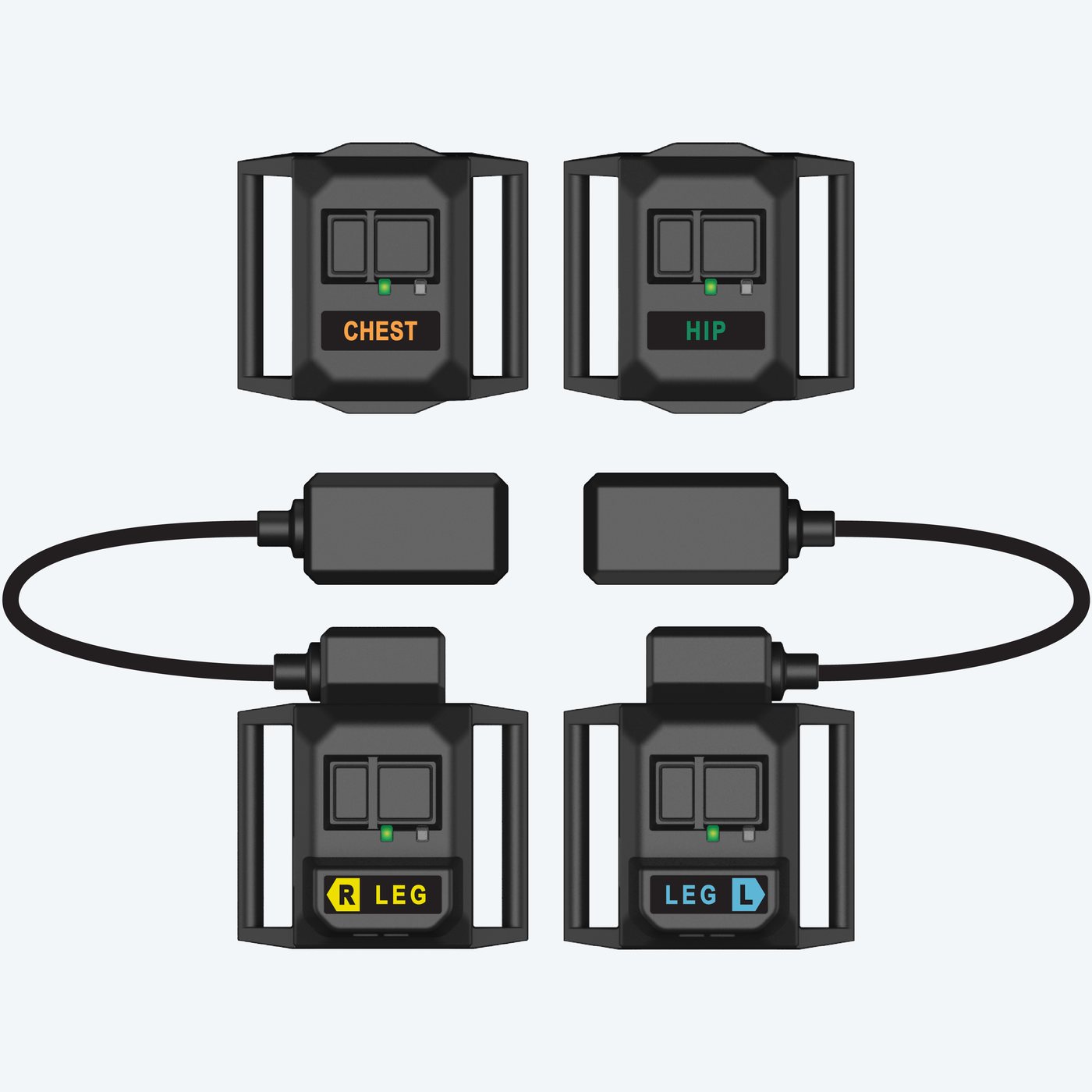
Six IMU points on the chest, hip, thighs, and shins. The leg units use a short cable. Bluetooth or a Shiftall dongle talks to a Windows PC. There is no base station.
Points
Chest, hip, both thighs, both shins
Weight
Chest and hip sensors 17 g. Thigh sensor 6 g
Battery
Chest and hip about 80 hours. Legs about 50 hours, or about 6 hours with LiDAR on
Radio
Bluetooth, or a GX2 or GX6 dongle. Firmware updates need Bluetooth on the PC
PC
Windows 10 64-bit or Windows 11. SteamVR 2.8.8 or later
Checked on
Quest 3 and 3S, Pico 4 and 4 Ultra, Index, Vive, and Steam Frame. Shiftall does not guarantee every headset
Drift fix
Add-on R lists at $149. It is an infrared camera and reflectors that correct yaw drift
Shiftall US store and the HaritoraX 2 product page, 14 October 2026. Source
Shiftall
HaritoraX 2 Pro
Shiftall
Sold out
$398
US store list, duty excluded. The product page showed Sold out on 14 October 2026. Japan list is ¥53,899 tax included.
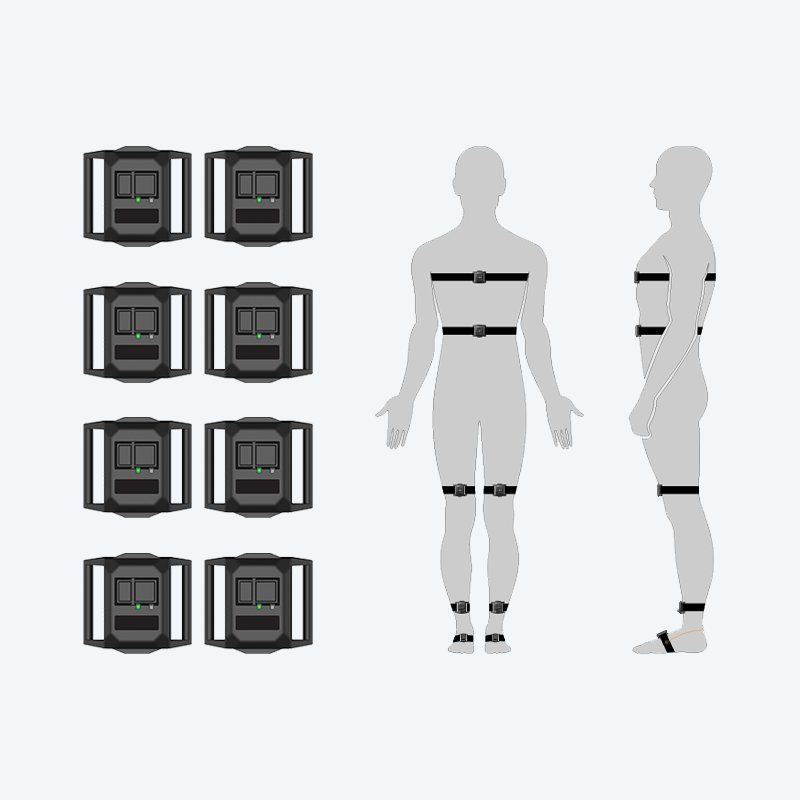
The wireless HaritoraX. Eight sensors, including the feet, and the GX2 dongle is in the box. Same IMU method as the HaritoraX 2, with no cable between thigh and shin.
Points
Chest, hip, thighs, ankles, and feet. Eight sensors
Weight
17 g each
Battery
About 80 hours. USB-C, about 2.5 hours to charge while off
Quest 3, Pico 4 Ultra, Index, Vive, and Steam Frame, on the same list as the HaritoraX 2
Shiftall US store and the HaritoraX 2 Pro product page, 14 October 2026. Source
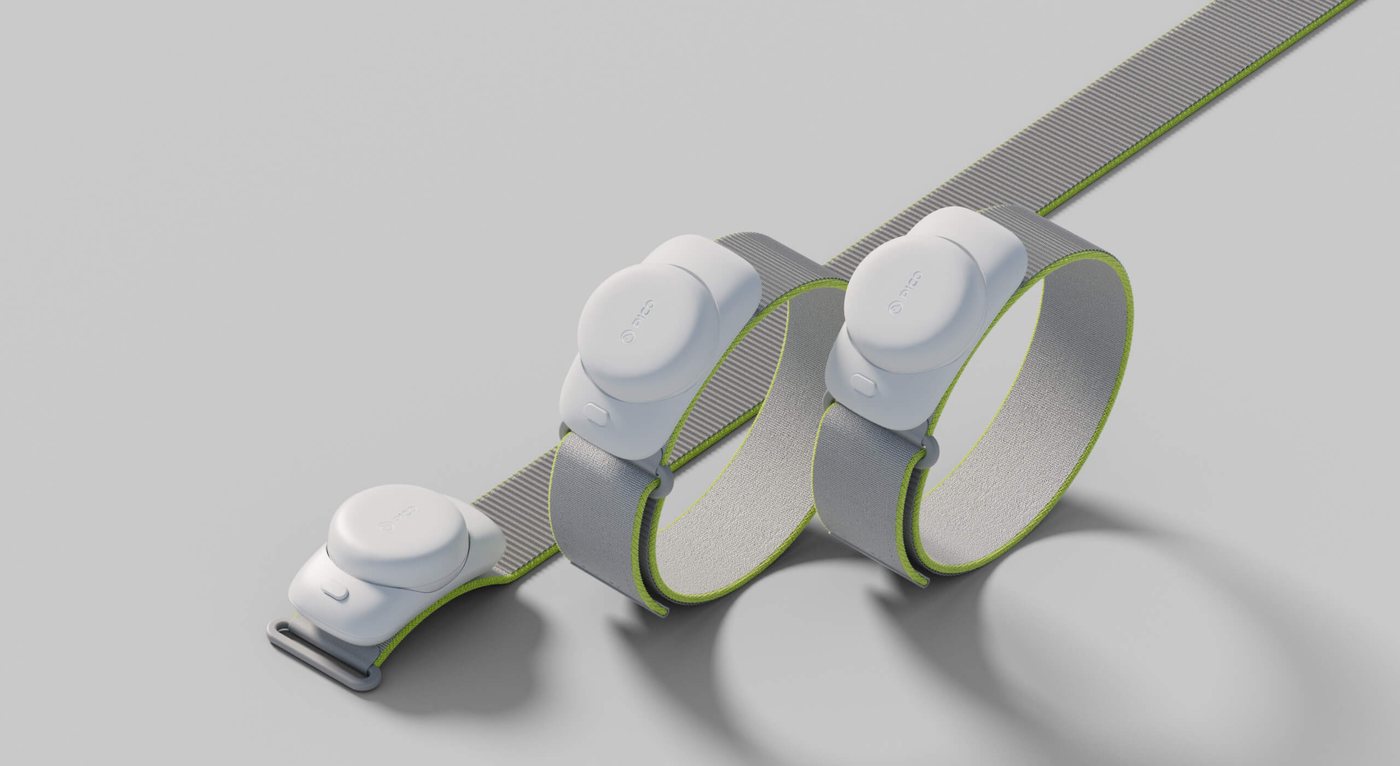
PICO
PICO Motion Tracker
PICO
Not in the US
¥11,800 for the pair
Yodobashi, in stock on 14 October 2026, tax included. Open price, so this is the shop price. A one-tracker waist version was ¥5,900 at the same shop. EU listings have been around €89 before tax. There is no US consumer list.
Two ankle pucks. Each one has an IMU and 12 infrared lights. The Pico headset sees the lights and infers a full skeleton. They pair with Pico headsets only.
Works with
Pico 4 Ultra, Pico 4 Pro, Pico 4, and Neo3
In the box
Two trackers with sockets, and two straps
Weight
About 27 g each, socket included, strap excluded
Sensors
9-axis IMU plus 12 active infrared sensors, up to 200 Hz
Battery
220 mAh, 25 hours or more, USB-C
Radio
2.4 GHz, PICO’s own protocol
Skeleton
PICO’s lab figures for two ankle trackers: 24 points, about 20 ms, about 5 cm, about 6°, step recognition at least 98%
Also
One tracker can ride on an object. A waist tracker is a separate box
Official buy page, 14 October 2026, Order now. Sold through Crowd Supply and Mouser. The price is a set, not one puck.
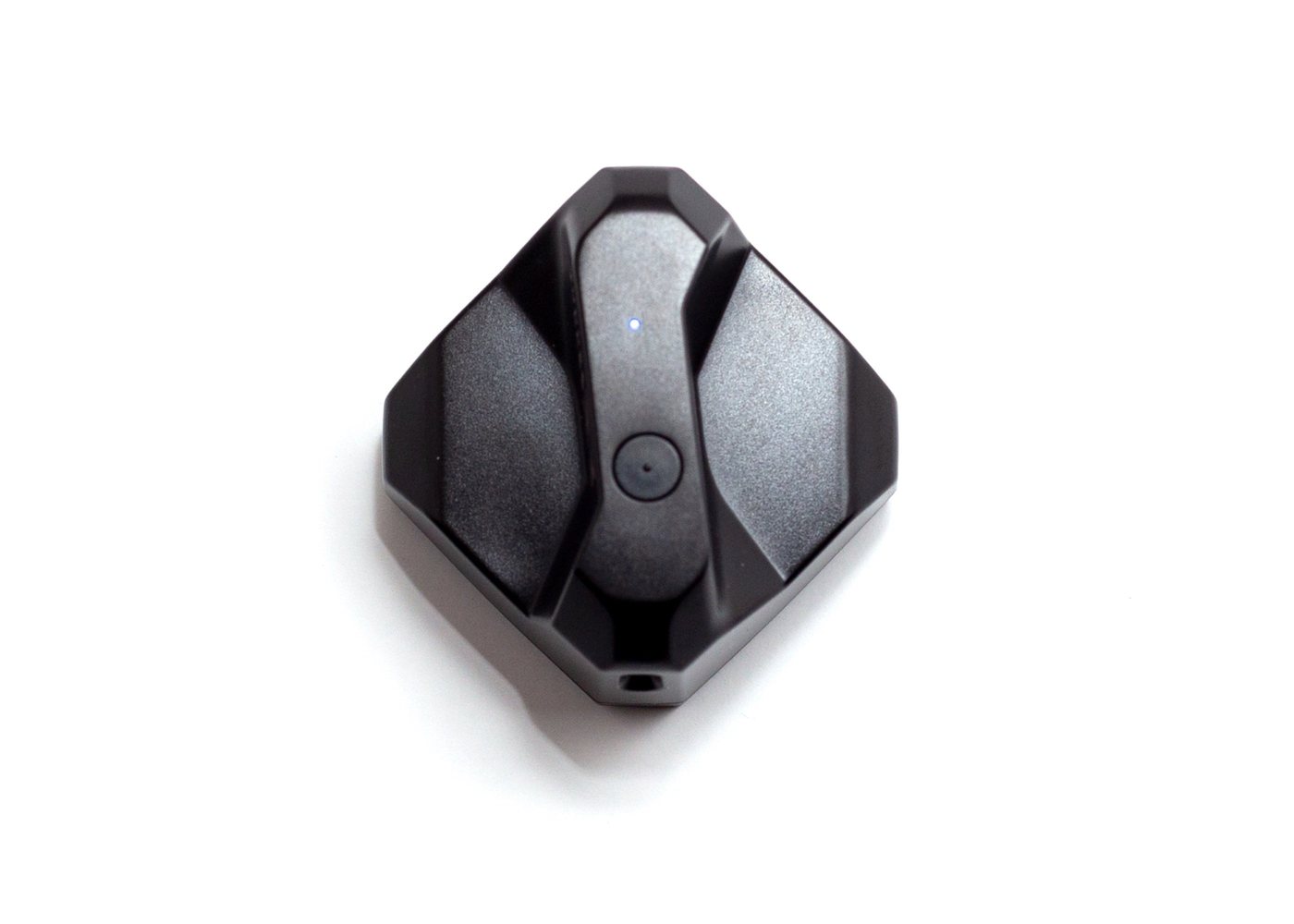
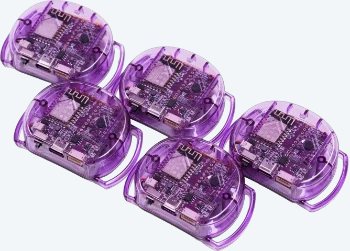
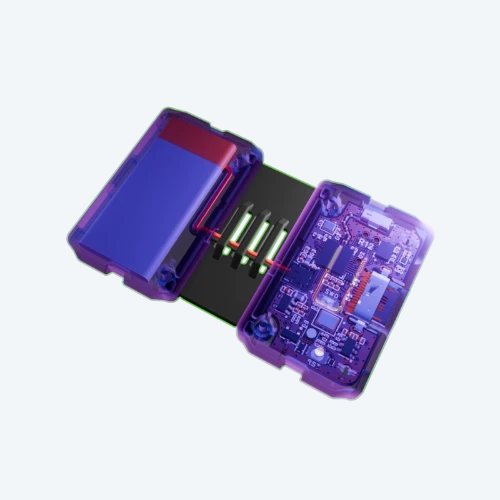
Open-source IMU trackers. They measure rotation and send it over Wi-Fi. The headset is the position anchor, so there is no base station and a blanket cannot hide them. Yaw still drifts.
Tracking
IMU rotation. Position is inferred from the headset
Set
Five trackers is the minimum for legs: chest, two thighs, two ankles. That also drives the knees
Radio
Wi-Fi 4, 2.4 GHz only
Weight
About 50 g
Battery
The buy page says 10 to 15 hours. The docs list about 18 to 20 hours for the Wi-Fi tracker
Drift reset
Look forward and double-tap the chest tracker
Output
SteamVR, OSC, or VMC. Standalone Quest 2, Quest 3, and Pico 4 when the app accepts it
Extensions
A smaller cabled IMU that shares the main tracker’s Wi-Fi, battery, and chip
slimevr.dev/buy and the SlimeVR docs, 14 October 2026. Source
SlimeVR
SlimeVR Butterfly
SlimeVR
Waitlist
From $279
Official buy page still said Pre-order on 14 October 2026. A June 2026 update aimed shipment at October 2026. Sold through Crowd Supply.
The thin official SlimeVR. Same IMU idea as the Wi-Fi set, with a 2.4 GHz dongle instead of Wi-Fi, and a much smaller puck.
Size
56 × 35 × 7 mm, under 10 g
Battery
Up to 48 hours from a 90 mAh cell. USB-C
Radio
2.4 GHz dongle for the set. The Wi-Fi tracker is the other SlimeVR
Rate
100 to 200 Hz
Output
SteamVR, OSC, and VMC. SlimeVR lists Quest, Pico, and Steam Frame
slimevr.dev/buy for the price. Crowd Supply Butterfly spec list. Source
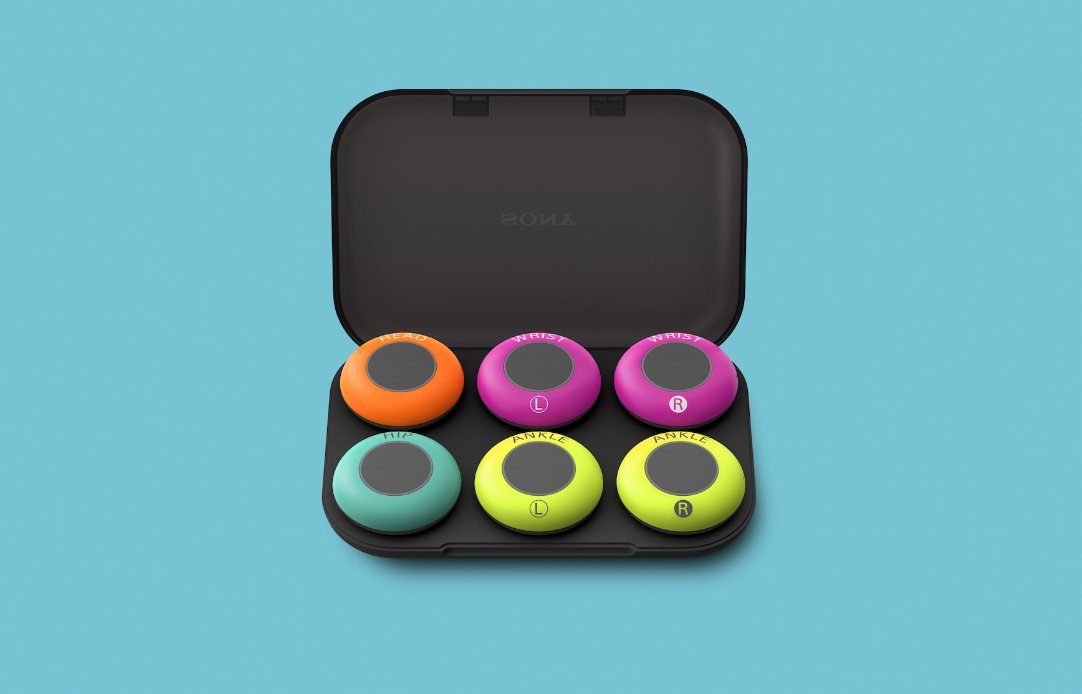
Sony
mocopi
Sony
On sale
$449.99
Sony US list price. On 14 October 2026 the same product page also showed $429.99, $20 off, with add to cart. The 12-sensor Pro Kit lists at $1,179.95.
Six tiny IMUs and a phone app. Head, hip, both wrists, both ankles. Sony’s algorithm fills in the elbows and knees. There are no cameras and no base stations.
Sensors
Six. 32 mm across, 11.6 mm thick, 8 g each
Sensing
Accelerometer and gyroscope. Bluetooth LE 5.2, about 10 m
Battery
Up to about 10 hours. The case charges all six over USB-C in about 1.5 hours
Sealing
IPX5 / IPX8 and IP6X
Height
Sony’s capture range is about 140 cm to 190 cm
In the box
Six sensors, head band, two wrist bands, two ankle bands, waist clip, charging case
PC
The mocopi link PC app ends 28 October 2026. PC and VR capture move to the mocopi PC app. Sony’s Japan store says the separate sensor data receiver is required for those apps. That receiver lists at $109.99
Sony US store, 14 October 2026. QM-SS1 specifications. Source
How VR tracking works
These are the ways a headset, a controller, or a worn sensor finds where you are. A tracker built for one of them does not speak the others. The limit of each method is the part the price leaves out.
Inside-out SLAM
Cameras on the headset watch the room and build a map as you move. Quest 3, Quest 3S, Pico 4 Ultra, Focus Vision, Galaxy XR, Steam Frame, Vision Pro, and Pimax SLAM mode all do this. Nothing is mounted on the wall. The map gets lost in the dark, on a blank wall, or when a hand covers the cameras.
Lighthouse, outside-in lasers
Base stations sweep the room with infrared lasers. Sensors on the headset, the controllers, and a Vive or Tundra puck time those sweeps. Tracking 1.0 uses two spinning rotors. Tracking 2.0 uses one rotor and syncs wirelessly. A 2.0 station does not see an original Vive wand or a Tracker 1.0. Two 2.0 stations cover about 5 m by 5 m. Four cover about 10 m by 10 m. The sensors need a line of sight to a station. Index, Beyond, Vive Tracker 3.0, and the Tundra Tracker use this. The base station itself is not a tracker.
Outside-in cameras
An older room puts the cameras on the desk and the markers on the gear. Oculus Constellation and the original PSVR camera worked that way. Turning your back on the camera, or standing between the camera and a controller, drops the track. PSVR2 tracks from cameras on the headset. It leaves the PSVR1 camera in the box unused.
Controller rings, and ringless
Ringed controllers put a bright constellation of infrared LEDs where the headset cameras can see it. Index controllers and the Pimax Crystal ring controllers are this shape. Ringless controllers, Touch Plus, Pico, Galaxy XR, and the Pimax ringless pair, hide the LEDs in the handle. An IMU carries the hand between camera frames. A ring stays recognizable farther toward the edge of the cameras. A ringless hand drops sooner once it leaves that view.
Hand tracking
The same outward cameras can watch bare hands. Quest, Pico, Vision Pro, Galaxy XR, and Focus Vision all ship this. It covers menus and some apps. Overlapping hands, a hand behind the back, and a dark room are where it falls apart. There is no product to buy. It is a mode on the headset.
Eye tracking
Inward cameras watch the pupils. Games use that for foveated rendering, which draws the center of your gaze sharper, and for avatars that look where you look. It is built into Focus Vision, Beyond 2e, Pimax Crystal Super, Dream Air, Varjo XR-4 at 200 Hz, PSVR2, Vision Pro, and Galaxy XR. The PSVR2 PC adapter drops it. Focus 3 uses the $249 add-on on the tracker cards. Glasses, heavy makeup, and a loose fit are the usual misses. Each person calibrates.
Face and mouth tracking
A camera under the face gasket watches the mouth and cheeks. The Vive Facial Tracker does this for Focus Vision and Focus 3: 38 blend shapes at 60 Hz. Some headsets read the lower face from an inside camera and the brow from the eye cameras. The blend shapes from a Vive do not drop onto a Quest avatar by themselves.
IMU body tracking
A sensor on the limb measures how that limb rotates. It does not measure where the limb is in the room. SlimeVR, HaritoraX, and mocopi work this way, and so do suits such as Rebocap. The headset, or a phone, is the position anchor, and the software infers knees and elbows from the points it does have. A blanket cannot occlude them, because there is no camera. Yaw drifts. SlimeVR’s reset is to look forward and double-tap the chest tracker. Five points is the usual minimum for legs. These pucks cannot pin a sword to a table the way a Lighthouse tracker can.
Self-tracked camera pucks
The Vive Ultimate Tracker carries its own cameras and builds a map the way a headset does. There is no base station. It still needs the Vive Wireless Dongle, one dongle for up to five pucks, and enough light to see the room. HTC asks for about 3 m by 3 m. Direct sun and a dark room are the failures.
Headset-assisted body tracking
PICO Motion Tracker is an IMU plus infrared lights the Pico headset can see. Two ankle pucks are enough for PICO’s software to estimate 24 skeleton points. The lights give the headset a position fix, which is why this holds yaw better than a pure IMU, and why it only runs on Pico 4 Ultra, Pico 4 Pro, Pico 4, and Neo3. A waist puck is a separate box.
Depth, LiDAR, and iToF
A depth sensor measures how far the walls and the furniture are. Quest 3 has one. Quest 3S does not. Pico 4 Ultra uses iToF. Varjo XR-4 uses LiDAR. Vision Pro uses depth sensing for the room mesh. This is for mixed reality, occlusion, and hands. It is not a body tracker.
Hybrid setups
Some headsets keep two systems and you pick one. Pimax Crystal Light, Crystal Super, and Dream Air can run onboard SLAM, and the models that accept a Lighthouse faceplate can use base stations instead. Dream Air lighthouse configs leave the controllers and the SLAM out of that box. Haritora’s Add-on R is an infrared camera that watches reflectors on the IMU sensors and corrects yaw. Buying both systems does not merge them into one coordinate space.
Studio optical motion capture
OptiTrack, Vicon, and similar rooms use many calibrated infrared cameras and either reflective markers or active markers. This is the film and lab standard. It wants a dedicated volume, a calibration, and a PC. There is no consumer card for it on this page.
Electromagnetic and ultrasonic
Magnetic trackers such as Polhemus measure position from a field, with no camera. Metal and other magnets bend that field. Ultrasonic kits timed sound pulses. Both show up in older labs. Current consumer headsets do not use them.
Estimated legs
Some runtimes guess your legs from the headset and the controllers alone. That is software. There is no sensor on the foot, and nothing to add to the cart. It looks right until you step somewhere the model did not predict.
What this page leaves out
Discontinued and not sold new by the maker: Quest 2, Quest Pro, the original M2 Vision Pro, Vive Pro 2, Vive XR Elite (HTC’s US store has it out of stock), and the HP Reverb G2.
Lighthouse 1.0 base stations. Valve and HTC sell the 2.0 station. A 1.0 station cannot track original Vive wands if you only own 2.0 stations, and the reverse mismatch is the usual support headache. Two 2.0 stations are the current room.
Straps, docks, and dongles sold by themselves. The tracker cards name the dongle when the puck will not run without one.
Studio camera rooms such as OptiTrack and Vicon. They are a tracking method, below, and they do not have a consumer shelf price.
Rebocap and other IMU suits that did not have a maker price I could check on 14 October 2026. The method is covered with SlimeVR, HaritoraX, and mocopi.
Announced and not shipping, beyond the Crystal Pro card: Pico Space Pro, Lynx R2, and Pimax Reality 12K have no street price and no ship date you can buy against.
Display glasses and camera glasses. XREAL, RayNeo, Ray-Ban Meta, and Samsung’s screenless Android XR glasses are not VR headsets.
No-name headsets without a stable spec sheet. The cards above are the products with a maker, a current price, and a spec list that survived a check this month.
Memory prices moved this hardware in 2026. Meta’s April increase, Apple’s June increase, and Pico’s May increase in Japan are already in the cards. If a shop price is far from the figure here, trust the maker’s page and the date on this one.