
TECHNOLOGY & MARKETS | PREDICTIVE ANALYSIS | NOVEMBER 16, 2026
Disclaimer: This article is speculative market analysis and commentary, not financial or investment advice. Predictions and scenarios discussed are opinions based on available information and should not be interpreted as recommendations to buy, sell, or hold any securities. Always conduct your own research before making investment decisions.
With NVIDIA facing its first leadership transition in 33 years, the semiconductor industry is confronting a question that once seemed unthinkable: What happens when the man who built the world's most influential AI hardware company is suddenly available to help build something else?
For more than three decades, Jensen Huang and NVIDIA were practically inseparable. The company he co-founded in 1993 transformed graphics processors from specialized gaming hardware into the computational foundation of modern artificial intelligence. Along the way, Huang became more than a chief executive. He became an architect of an industry, a trusted intermediary between competing technology giants, and arguably one of the most influential figures in the global semiconductor supply chain.
On November 12, that arrangement ended.
NVIDIA announced Huang's resignation, naming longtime chief financial officer Colette Kress as interim CEO. The departure followed reports concerning Huang's personal relationships and an ongoing investigation into possible national-security implications involving alleged Chinese intelligence connections. Those allegations remain unresolved, and no finding that Huang compromised NVIDIA's technology has been established.
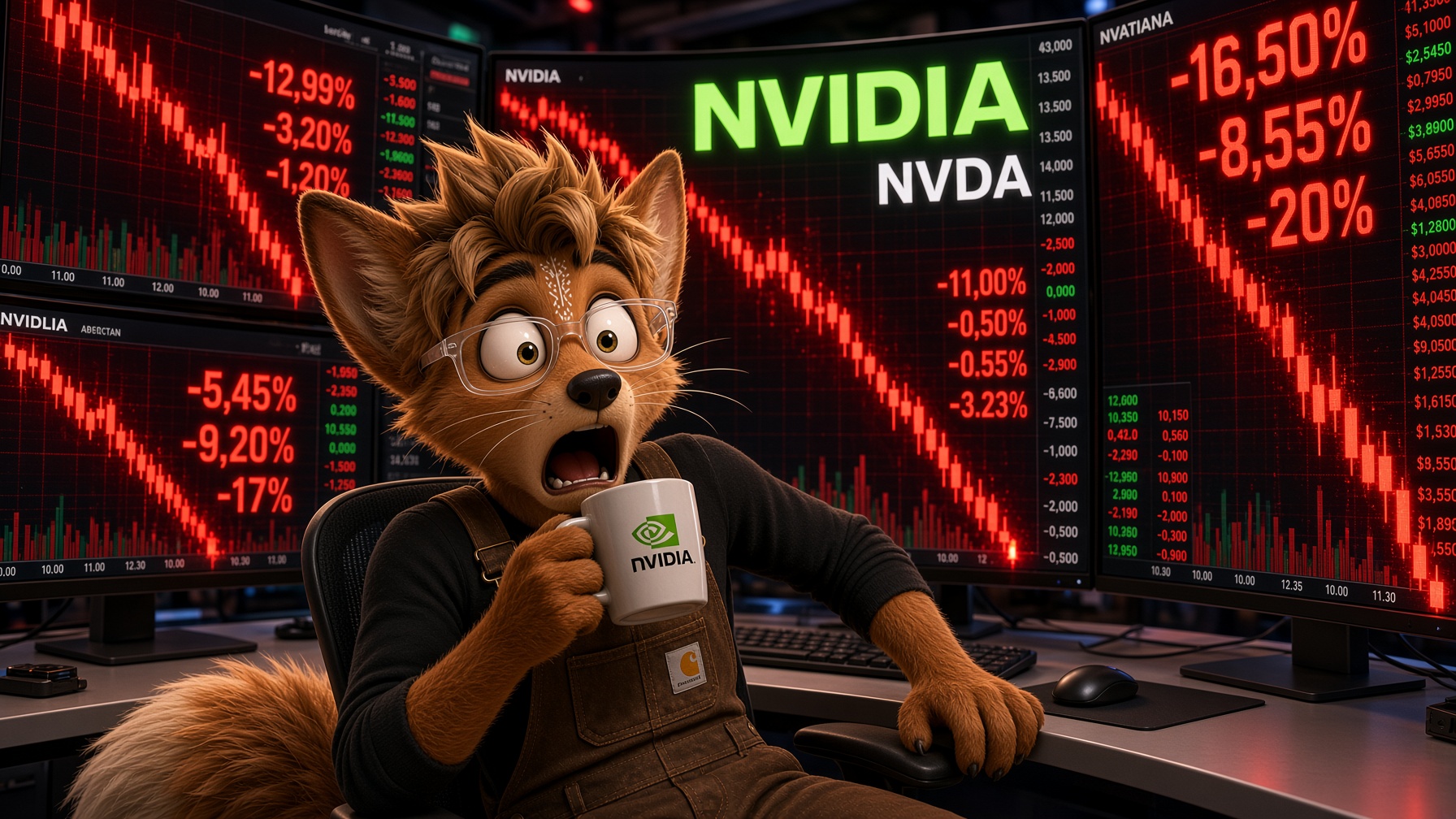
The immediate reaction was financial uncertainty. Investors began reassessing NVIDIA's leadership, governance, customer relationships, and long-term position in an increasingly competitive AI market.
But the more consequential question may not be what NVIDIA has lost.
It may be what another company could gain.
And one potential destination stands apart from the rest: Elon Musk's expanding network of artificial intelligence, aerospace, robotics, and computing businesses.
A Relationship That Began With a Supercomputer
In 2016, Huang personally delivered NVIDIA's first DGX-1 AI supercomputer to OpenAI, then a relatively young research organization co-founded by Musk.
The machine contained eight Tesla P100 accelerators and represented an early commitment to the idea that artificial intelligence would require purpose-built computing infrastructure rather than conventional servers alone.
Nearly a decade later, Huang repeated the gesture, delivering a DGX Spark to Musk at SpaceX's Starbase facility in October 2025.
These exchanges were symbolic, but the relationship behind them had commercial significance. Musk's companies have become major consumers of accelerated computing, while Huang helped establish NVIDIA as the essential supplier to much of the AI industry.
Their relationship is now attracting renewed attention.
On November 13, Fortune reported that Musk had publicly welcomed the prospect of hiring Huang, calling it an honor. Musk subsequently supported a campaign advocating Huang's return to NVIDIA.
Those positions are not necessarily contradictory. Musk may prefer a stable NVIDIA while simultaneously recognizing the extraordinary opportunity presented by Huang's availability.
For the market, the distinction matters.
A friendship between two billionaires is interesting. A potential partnership between the architect of the AI accelerator industry and one of its most ambitious customers could change the competitive landscape.
NVIDIA's Vulnerability Is Larger Than Its Leadership Crisis
It would be premature to declare NVIDIA finished.
Its CUDA ecosystem, accelerator designs, networking technology, systems integration, developer relationships, and extensive manufacturing partnerships represent formidable competitive advantages. Reproducing those capabilities would require years of investment.
But market dominance can conceal structural weaknesses.
NVIDIA depends heavily on the continued expansion of AI infrastructure spending. Its largest customers are investing enormous sums into data centers, electrical systems, cooling equipment, networking, and specialized processors.
Those investments must eventually produce sufficient economic returns.
At the same time, NVIDIA faces increasing pressure from custom accelerators, competing chip manufacturers, export restrictions, and customers seeking greater control over their own computing platforms.
Huang's departure introduces another variable: whether the company's most important relationships are institutional or personal.
Reuters reported on November 16 that NVIDIA's next earnings briefing would be closely scrutinized for leadership stability, customer commitments, and the sustainability of its AI investment ecosystem. Its shares had fallen roughly one-third from their October peak.
The danger is not that NVIDIA's technology suddenly becomes obsolete.
It is that investors may begin valuing the company as a powerful but increasingly contested semiconductor supplier rather than the unquestioned gatekeeper of artificial intelligence.
That difference could be enormous.
China, National Security, and the Cost of a Closed Ecosystem
The allegations surrounding Huang have also brought renewed scrutiny to NVIDIA's relationship with China.
NVIDIA remains an American corporation. There is no established evidence that it has become Chinese-controlled, and its proprietary CUDA ecosystem does not make it a Chinese company.
Nevertheless, the geopolitical risks are real.
The United States increasingly treats advanced AI computing as a strategic national-security resource. Export restrictions are designed to prevent certain high-performance accelerators from strengthening rival military or intelligence capabilities.
NVIDIA operates in the uncomfortable position of supplying a globally demanded technology while being subject to increasingly restrictive national policies.
Its proprietary software ecosystem creates customer dependence, but it also encourages governments and major technology companies to develop alternatives.
China has powerful incentives to accelerate domestic semiconductor and AI software development. American hyperscalers have similar commercial incentives to reduce their dependence on NVIDIA, even without the geopolitical dimension.
This creates a potential long-term market transition.
The future may belong less to a single dominant GPU supplier and more to competing vertically integrated computing ecosystems.
NVIDIA could remain the largest participant in that market while surrendering some of the extraordinary pricing power and strategic influence it currently enjoys.
That is a credible bear case.
It is considerably more defensible than predicting that NVIDIA will simply disappear.
The Musk Alternative: Building an AI Empire Beyond NVIDIA
Musk's business interests have evolved into something unusual.
Tesla is developing autonomous vehicles, robotics, and AI computing. xAI is building large-scale artificial intelligence systems. SpaceX is developing launch vehicles, satellite networks, and aerospace infrastructure.
These operations increasingly share a fundamental requirement: massive computational capability.
Today, NVIDIA supplies much of the industry with the processors and software needed to deliver that capability.
But what if Musk decided that purchasing the future of computing from another company was no longer sufficient?
The answer could be vertical integration.
Rather than depending entirely on outside suppliers, Musk's companies could pursue greater ownership of chip design, software, networking, computing infrastructure, and eventually manufacturing.
That ambition would be extraordinarily expensive and technically difficult. Semiconductor fabrication requires specialized equipment, highly developed processes, enormous capital investment, and experienced engineering teams.
It is also precisely the kind of challenge for which Huang's knowledge would be valuable.
Huang understands the engineering and commercial relationships connecting chip designers, manufacturers, software developers, and major AI customers. His expertise extends far beyond designing graphics processors.
If Musk were to recruit Huang, the most valuable contribution might not be another GPU.
It might be the creation of an entirely new computing architecture designed around the combined needs of Musk's companies.
There is an important obstacle: Huang's knowledge and experience could move with him, but NVIDIA's intellectual property, trade secrets, and contractual protections would not.
A competing venture would have to build its own technology lawfully.
Could the Next AI Data Center Be in Space?
This is the most speculative part of the prediction, but also one of the most consequential.
SpaceX's launch capabilities create the possibility of deploying increasingly sophisticated computing systems in orbit.
An orbital AI infrastructure network could theoretically benefit from solar energy, specialized communications infrastructure, and the ability to deploy computing resources outside conventional terrestrial locations.
But space introduces serious engineering disadvantages.
Computers generate heat, and vacuum prevents ordinary convective cooling. Large orbital data centers would need extensive radiators to reject waste heat. Radiation, servicing, launch costs, hardware replacement, and communications latency would create additional complications.
Space is not automatically a cheaper place to run artificial intelligence.
For conventional AI training, terrestrial data centers are likely to retain substantial economic advantages for the foreseeable future.
However, orbital computing could become attractive for specific applications, including satellite data processing, autonomous spacecraft, and workloads where processing information close to its source reduces communication requirements.
The more credible prediction is therefore not that SpaceX will replace every terrestrial data center.
It is that SpaceX could eventually create a specialized market for space-based computing, with technologies that may later influence the broader industry.
Huang's expertise in energy-efficient accelerated computing could be particularly useful in that environment.
Three Possible Futures for NVIDIA
The next 12 to 36 months could follow several different paths. The following probabilities are subjective scenario estimates, not the output of a statistical forecasting model.
### Scenario 1: NVIDIA Stabilizes and Retains Its Dominance - 55%
NVIDIA appoints credible permanent leadership, preserves customer confidence, and executes its next hardware roadmap. Huang either returns in some capacity or remains outside the company without creating a major rival.
### Scenario 2: NVIDIA Survives but Loses Strategic Influence - 30%
NVIDIA remains profitable and technologically competitive, but hyperscalers, custom silicon, rival GPU manufacturers, and regulatory pressures gradually reduce its margins and market dominance.
### Scenario 3: A Major Industry Realignment - 15%
Huang joins or advises a competing computing initiative, potentially involving Musk. NVIDIA faces intensified competition while major AI customers increasingly control their own hardware and software platforms.
These scenarios are intended to describe NVIDIA's primary market trajectory, not every possible outcome. Huang joining Musk could occur even if NVIDIA remains dominant.
The Companies Positioned to Benefit
AMD: Greater adoption of alternative AI accelerators could strengthen AMD's position. However, NVIDIA's CUDA ecosystem and software maturity remain substantial obstacles.
Broadcom: Custom AI silicon and high-performance networking could benefit as major customers develop alternatives to conventional GPU infrastructure. Growth remains dependent on those customers' investment plans.
TSMC: The world's leading advanced semiconductor foundry could benefit regardless of which chip designer wins, although geographic concentration and manufacturing capacity remain significant risks.
Tesla: Greater vertical integration could strengthen Tesla's autonomous driving, robotics, and computing ambitions. Execution costs and technological competition remain major obstacles.
SpaceX: Aerospace AI infrastructure and orbital computing could create entirely new markets, provided the underlying technology proves economically viable.
There is another possibility that investors should not overlook: NVIDIA could continue growing even as its customers diversify.
The global market for AI computing may expand fast enough to support several successful architectures simultaneously.
Competition does not necessarily mean the incumbent loses all its business.
The First Real Test Arrives November 17
NVIDIA is scheduled to report its fiscal third-quarter results on November 17, with its first earnings call under interim leadership.
Reuters reports that analyst consensus anticipates approximately $109.08 billion in quarterly revenue and $2.47 in adjusted earnings per share.
But the earnings figures alone will not settle the central questions.
Investors should be watching for evidence of customer cancellations, changes to long-term purchasing commitments, uncertainty surrounding the Vera Rubin platform, shifts in capital spending, and the board's plans for permanent leadership.
Perhaps most importantly, investors should examine whether NVIDIA's customers continue behaving as though the company is indispensable.
A single disappointing quarter would not establish a structural decline. A sustained pattern of customers shifting new AI workloads toward competing architectures would be more meaningful.
The second test will be Huang himself.
On November 16, Reuters reported that NVIDIA's board was not considering reinstating him despite a growing public campaign. That does not establish what Huang intends to do next, but it makes the question of his future increasingly relevant.
If he joins Musk, investors will need to distinguish between a symbolic appointment and a serious effort to develop competing technology.
A board advisory position would be one thing.
A multibillion-dollar semiconductor initiative with manufacturing partners, engineering hires, and a defined product roadmap would be something else entirely.
The Prediction: NVIDIA May Survive, but Its Era of Unquestioned Dominance Could Be Ending
The DGX-1 delivered to OpenAI in 2016 represented the beginning of a new computing era.
It demonstrated that artificial intelligence was becoming important enough to justify machines designed specifically for its computational requirements.
A decade later, the same two men associated with that moment find themselves at another potential turning point.
Huang is no longer NVIDIA's CEO. Musk is building businesses that consume extraordinary amounts of computing power. Governments are increasingly concerned about who controls the semiconductor supply chain. Major technology companies are searching for ways to reduce dependence on individual suppliers.
Those developments are not proof of a coordinated plan.
But they are the ingredients of a possible industrial realignment.
My central prediction is that NVIDIA will remain a major force in artificial intelligence through the end of this decade, but its ability to dictate the economics and architecture of AI computing will face increasing pressure.
A second, more speculative prediction is that Huang could become involved in an independent AI infrastructure venture. Musk's companies are credible potential partners, although no agreement has been confirmed.
And a third prediction is that the competition for AI infrastructure will increasingly extend beyond processors into energy, networking, manufacturing, robotics, and specialized computing environments, potentially including space.
The greatest threat to NVIDIA may not be an immediate competitor with a faster chip.
It may be the emergence of customers powerful enough to stop being customers.
That is the irony of NVIDIA's extraordinary success. By enabling the growth of the world's largest AI companies, it has also helped create organizations with the financial resources, technical ambitions, and economic incentives to challenge its dominance.
NVIDIA built the infrastructure that made the AI revolution possible. The next stage of that revolution may be defined by who no longer needs NVIDIA to build it.
---
Disclaimer
This article represents speculative market analysis, personal opinion, and forward-looking commentary based on information available as of November 16, 2026. It is provided for informational and discussion purposes only and does not constitute financial, investment, legal, or professional advice.
The scenarios and probability estimates presented are subjective assessments, not statistical forecasts or guarantees of future performance. Nothing in this article should be interpreted as a recommendation to buy, sell, or hold NVIDIA or any other securities.
Financial markets involve substantial risk. Readers should conduct independent research and consult a qualified financial professional before making investment decisions.
Allegations concerning Jensen Huang and foreign intelligence remain unresolved. No appointment of Huang to SpaceX, Tesla, or xAI has been confirmed.
Published by EngineerIsaac | engineerisaac.com
Comments